
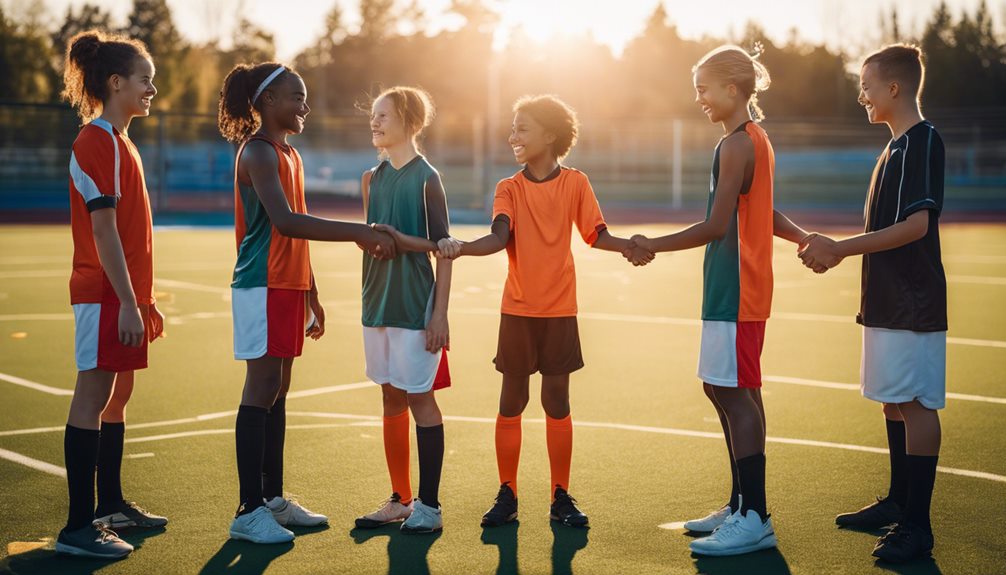
Sportsmanship plays a crucial role in building character by encouraging respect, integrity, and accountability. It motivates individuals to value fair play and teamwork over mere victory, shaping them into empathetic and responsible members of society. Athletes learn to handle conflicts maturely, enhancing their emotional intelligence and communication skills. Additionally, sportsmanship nurtures resilience, teamwork, and a positive attitude, which benefit personal and professional growth. This foundation not only aids individual development but also cultivates a sense of community and shared values. Comprehending its impact reveals deeper connections to personal growth and character building.
Defining Sportsmanship
Sportsmanship is often described as a fundamental quality that reflects respect, fairness, and graciousness in competition. It embodies ethical behavior, urging athletes to adhere to accountability standards that guarantee all participants engage honorably. Defined by the principles of fair play, sportsmanship additionally champions a competitive spirit that values skill and effort over victory at any cost.
A positive attitude is vital in sportsmanship, as it nurtures an environment where athletes can thrive regardless of the outcome. This mindset promotes emotional intelligence, enabling individuals to navigate the highs and lows of competition with grace. Sportsmanship is also about leadership skills; those who exemplify this quality often inspire others through role modeling, encouraging peers to uphold similar values.
Moreover, conflict resolution plays a significant role in defining sportsmanship. Athletes who can address disputes constructively demonstrate maturity and respect for all involved. They contribute to a culture of inclusivity, guaranteeing that everyone feels valued and supported, regardless of their skill level.
In essence, sportsmanship transcends mere participation in sports; it's about cultivating an attitude and set of behaviors that reflect a commitment to fair competition and mutual respect. By integrating inclusive practices into their approach, athletes not just improve their own experiences but additionally positively influence the communities they represent. Consequently, defining sportsmanship requires a holistic comprehension of its components, encompassing ethical behavior, competitive integrity, and a dedication to cultivating an environment where all can succeed.
Benefits of Sportsmanship
Sportsmanship offers numerous benefits that extend further than the game itself. It nurtures respectful competition, encourages team collaboration, and builds resilience and integrity among athletes. These qualities not merely improve the sporting experience but likewise contribute to personal growth and development.
Fosters Respectful Competition
Even though competition often stirs intense emotions, it's the presence of sportsmanship that transforms it into a respectful exchange. Respectful behavior during competition cultivates a competitive spirit that encourages athletes to aim for excellence without compromising their integrity. By adhering to ethical standards and practicing fair play, participants not just improve their own experience but additionally uplift their opponents.
A positive attitude in the face of rivalry encourages social interaction and strengthens bonds among competitors, eventually leading to better conflict resolution skills. Such environments promote emotional intelligence, as athletes learn to navigate their feelings and those of others during high-pressure situations.
The table below highlights key aspects of respectful competition:
| Aspect | Impact on Athletes |
|---|---|
| Respectful Behavior | Builds trust and camaraderie |
| Competitive Spirit | Drives personal growth |
| Positive Attitude | Improves overall enjoyment |
| Fair Play | Promotes integrity development |
Through these principles, sportsmanship lays the foundation for crucial leadership skills. In encouraging respectful competition, athletes not only become better competitors but also more well-rounded individuals, ready to tackle challenges both on and off the field.
Encourages Team Collaboration
In the domain of competitive sports, the core of team collaboration thrives when athletes embrace sportsmanship. Sportsmanship cultivates an environment where players prioritize collective goals over individual accolades, nurturing team synergy that's vital for success. When athletes exemplify fair play and mutual respect, they lay the groundwork for cooperative strategies that improve their performance on and off the field.
Athletes who practice sportsmanship recognize the value of each team member's contributions, creating a culture of support and trust. This atmosphere encourages open communication, allowing teammates to strategize effectively during significant moments. As they celebrate each other's achievements, they reinforce the bonds that in the end boost the entire team's performance.
Moreover, sportsmanship instills a sense of accountability, prompting players to hold themselves and each other to high standards. This shared commitment not only improves teamwork but additionally enriches the overall experience of competition, as athletes work together to overcome challenges. At its core, embracing sportsmanship doesn't merely shape skilled competitors; it transforms them into collaborative forces capable of achieving greatness through unity and respect.
Builds Resilience and Integrity
Embracing sportsmanship not just improves team collaboration but likewise nurtures resilience and integrity among athletes. Through the practice of ethical behavior, athletes learn to navigate challenges with grace, forging character development that extends beyond the playing field. This experience promotes emotional intelligence, enabling them to manage their emotions and respond to adversity constructively.
In competitive environments, conflict resolution becomes crucial. Athletes who exemplify sportsmanship develop leadership skills, guiding peers through difficulties as they reinforce accountability measures within their teams. By setting clear goals, they demonstrate self-discipline, showcasing the ability to remain focused and committed, even when faced with setbacks.
Moreover, mentoring relationships formed in sports create a supportive atmosphere where young athletes can learn from seasoned players. This peer influence encourages a culture of resilience, as individuals inspire one another to overcome obstacles collectively. The principles of sportsmanship teach athletes that integrity is not just about winning; it's about how one conducts themselves, instilling a sense of responsibility to uphold values both in competition and life. In the end, these lessons in resilience and integrity become invaluable assets that shape well-rounded individuals, prepared to face life's challenges head-on.
Sportsmanship and Respect
Sportsmanship values play an essential role in shaping how athletes interact with one another. By encouraging mutual respect, players cultivate an environment that improves team dynamics and promotes collaboration. In the end, these principles not just raise individual character but additionally contribute to the overall success of the team.
Defining Sportsmanship Values
Respect stands as a cornerstone of sportsmanship values, shaping not merely how athletes interact with one another but similarly how they represent their teams and communities. It encourages an environment where ethical behavior flourishes, motivating athletes to uphold fair play and integrity. Developing character through sportsmanship involves more than merely physical skill; it requires emotional intelligence, empathy training, and the ability to engage in conflict resolution.
| Sportsmanship Value | Description |
|---|---|
| Ethical Behavior | Upholding integrity and honesty in all actions. |
| Fair Play | Competing justly and valuing the spirit of the game. |
| Accountability | Taking responsibility for one's actions and decisions. |
These values contribute to character development, preparing athletes for leadership roles both on and off the field. By embracing sportsmanship, individuals cultivate leadership skills that extend beyond competition, promoting a culture of respect and comprehension. As athletes commit to these principles, they not only improve their performance but additionally set a standard for future generations, illustrating the profound impact of sportsmanship on personal growth and community building.
Encouraging Mutual Respect
Mutual respect forms the backbone of any successful athletic environment, nurturing strong relationships among teammates, opponents, coaches, and fans alike. It cultivates mutual comprehension, allowing individuals to appreciate each other's perspectives and experiences. Respectful communication is crucial in establishing this environment, as it encourages open dialogue and helps in conflict resolution.
To encourage mutual respect, athletes and coaches can implement the following strategies:
- Empathy Development: Encourage team members to practice empathy, grasping the emotions and challenges faced by others.
- Positive Reinforcement: Recognize and celebrate instances of sportsmanship, reinforcing desirable behaviors that promote a collaborative spirit.
- Inclusive Environment: Create spaces where everyone feels welcome and valued, ensuring that diverse voices contribute to the team's shared goals.
Impact on Team Dynamics
A strong sense of sportsmanship and respect greatly influences team dynamics, promoting collaboration and unity among players. When athletes demonstrate sportsmanship, they cultivate an environment conducive to team cohesion. This collaboration is crucial for developing emotional intelligence, allowing players to navigate interpersonal relationships effectively.
Effective communication strategies emerge as team members engage in positive reinforcement, acknowledging each other's contributions. With strong leadership skills, captains can implement accountability measures, ensuring everyone is aligned with shared goals. Trust building becomes easier when players respect one another, creating a safe space for conflict resolution.
Adaptive strategies are important in high-pressure situations, and a team that values sportsmanship can pivot gracefully. Below is a table illustrating how sportsmanship impacts various aspects of team dynamics:
| Aspect | Impact |
|---|---|
| Team Cohesion | Strengthens bonds |
| Emotional Intelligence | Improves interpersonal skills |
| Conflict Resolution | Promotes constructive dialogue |
| Leadership Skills | Encourages effective guidance |
| Communication Strategies | Enhances clarity and trust |
Impact on Personal Development
Through the lens of sportsmanship, individuals often experience significant personal development that shapes their character and values. Engaging in sports not merely cultivates physical ability but also nurtures essential life skills. This expedition promotes self-esteem improvement and emotional intelligence, both of which are fundamental for personal growth.
Firstly, sportsmanship teaches individuals the importance of respect and fairness. Participants learn to appreciate their opponents, which nurtures empathy and emotional awareness. This realization translates into daily interactions, improving one's ability to navigate complex social situations.
Secondly, the challenges faced in sports encourage resilience. Athletes learn to embrace failure and setbacks, recognizing them as opportunities for growth. This mindset nurtures a strong sense of self-worth, reinforcing their belief in their abilities, which is a significant aspect of self-esteem improvement.
Lastly, teamwork in sports provides a platform for developing communication skills. The necessity to convey strategies and collaborate with teammates sharpens one's ability to express thoughts clearly and listen actively. These skills are invaluable in both personal and professional domains, contributing to overall emotional intelligence.
Role in Team Dynamics
Sportsmanship greatly influences team dynamics, nurturing an environment where collaboration thrives. When athletes demonstrate respect, fairness, and integrity, they improve team cohesion, creating a solid foundation for mutual support. These principles encourage communication skills among teammates, promoting open dialogue that strengthens relationships and improves overall performance.
In a team setting, leadership qualities emerge naturally through sportsmanship. Players who model positive behavior often inspire others to follow suit, establishing a culture of role modeling that reinforces shared values. This environment promotes trust building, as teammates learn to rely on one another both on and off the field. Trust is vital for effective conflict resolution, enabling players to address disagreements constructively rather than allowing tension to escalate.
Emotional intelligence plays a significant role in this dynamic as well. Athletes who understand their own emotions and those of their peers can navigate challenges more adeptly, cultivating an atmosphere of peer support. They can identify when a teammate needs encouragement and implement motivation strategies that uplift the entire group.
Moreover, adaptability training becomes important in cultivating a resilient team. As athletes face various challenges, sportsmanship equips them with the tools to adapt, ensuring they respond positively to adversity. By embracing these principles, teams not only improve their performance but also develop character traits that extend beyond the game, preparing individuals for future challenges in life. Therefore, sportsmanship is a cornerstone of effective team dynamics, paving the way for collective success.
Long-term Community Effects
Positive sportsmanship extends far beyond the playing field, nurturing long-term community effects that resonate throughout society. When individuals embrace fair play, they contribute to a culture of community engagement that cultivates civic pride and social responsibility. This foundation not just uplifts local sports but equally extends its influence into various aspects of life.
The benefits of sportsmanship can be seen in several key areas:
- Youth Involvement: Youth who participate in sports develop crucial leadership skills and become role models for their peers. These experiences help them understand the value of teamwork and commitment, encouraging them to remain engaged in their communities.
- Volunteer Opportunities: Positive sportsmanship often leads to increased volunteerism. Community members, inspired by their experiences in sports, seek ways to give back, whether through coaching, organizing events, or supporting local initiatives.
- Mentorship Programs: By nurturing inclusive practices, sports organizations create mentorship programs that connect seasoned athletes with younger participants. This relationship not only improves character education but also builds a supportive network that promotes personal growth.
Frequently Asked Questions
How Can Parents Encourage Sportsmanship in Their Children?
Parents can encourage sportsmanship in their children by using positive reinforcement and role modeling. When kids display good sportsmanship, parents should praise their efforts, reinforcing the behavior they want to see. Moreover, by demonstrating fair play and respect in their own activities, parents set a strong example. They can engage in discussions about the values of teamwork and respect, helping their children understand the importance of sportsmanship both on and off the field.
What Are Some Examples of Unsportsmanlike Behavior?
Unsportsmanlike behavior manifests in various forms, including cheating and aggressive taunting. When athletes bend the rules to gain an unfair advantage, they face significant consequences that can tarnish their reputation. Furthermore, engaging in aggressive taunting not only disrespects opponents but likewise creates a toxic atmosphere. Such actions undermine the spirit of competition, erode respect among players, and in the end diminish the integrity of the sport itself, reminding everyone involved of the importance of fair play.
How Does Sportsmanship Differ Across Various Sports?
Sportsmanship varies greatly across sports, with a study revealing that 75% of athletes believe it directly influences team dynamics. In team sports like soccer, a competitive spirit often nurtures camaraderie, whereas in individual sports such as tennis, the focus can shift to personal achievement. This shift alters how athletes perceive fair play and respect. In the end, these differences shape the culture of each sport, highlighting the nuanced role sportsmanship plays in athletic environments.
Can Sportsmanship Be Taught Outside of Sports?
Sportsmanship can definitely be taught outside of sports. In various settings, individuals learn teamwork values through collaborative projects, promoting respect and cooperation. Conflict resolution skills are honed in professional environments where communication and compromise are vital. By encouraging open dialogue and empathy in these contexts, people can develop a strong sense of sportsmanship. This mindset not merely improves interpersonal relationships but additionally cultivates a culture of integrity and mutual respect in everyday life. For instance, Japanese workplace etiquette emphasizes respect, patience, and harmony, which closely align with the principles of sportsmanship. Employees are encouraged to prioritize group success over individual gains, fostering a spirit of cooperation and mutual support. By adopting such values in different aspects of life, individuals can further reinforce the importance of fairness and integrity in their daily interactions.
What Role Does Sportsmanship Play in Leadership Skills?
In the domain of leadership, sportsmanship contrasts sharply with self-serving behaviors. It nurtures leadership development by promoting teamwork and collaboration. When leaders exhibit ethical decision-making, they inspire trust and respect among their peers. This trust is vital, as it cultivates an environment where individuals feel valued and motivated. In the end, sportsmanship equips leaders with the necessary skills to navigate challenges, making them effective role models who prioritize integrity and collective success over personal gain.