
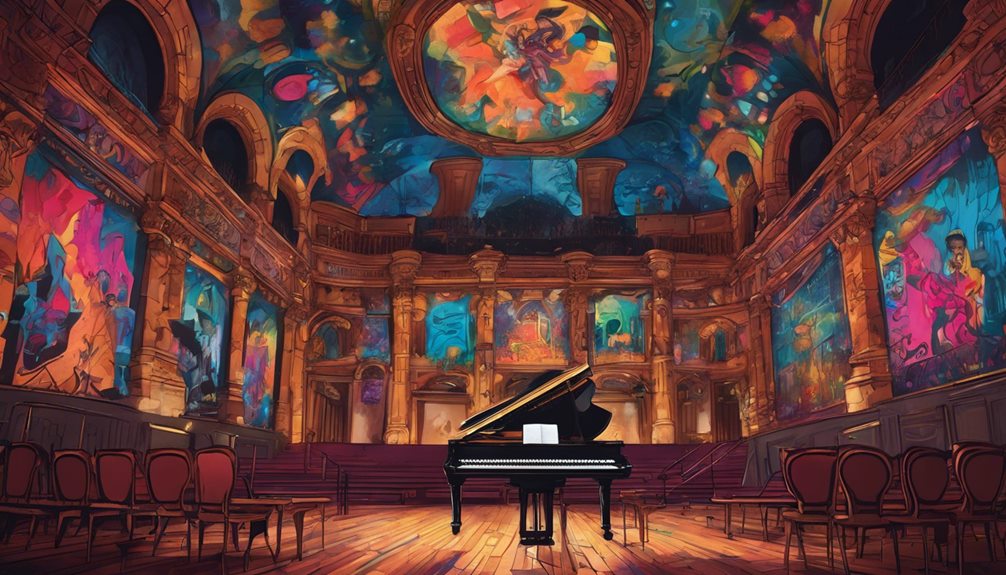
Unconventional venues are redefining the art scene, nurturing immersive experiences that converge art, music, and environment. Abandoned warehouses, churches, and underground spaces serve as unique backdrops for innovative collaborations, where site-specific installations, interactive graffiti murals, and sound installations create multisensory experiences. blurring traditional norms, artistic collaborations and community engagement challenge conventional notions of art and music. From sonic environments to nature-inspired installations, these unique venues inspire liberation from urban constraints, encouraging new forms of engagement with art and music. As creative boundaries dissolve, the intersection of art, music, and environment awaits further exploration, leading to new domains of innovative expression.
Unconventional Spaces Redefine the Art Scene
Beyond the confines of traditional galleries and museums, unconventional spaces are revolutionizing the art scene by offering innovative and immersive experiences. These spaces, often unexpected and unconventional, encourage community engagement and cultural festivals that break free from the traditional mold. Street art, once seen as a rebellious act, has become a celebrated form of self-expression, with many artists using the streets as their canvas.
Pop-up galleries have likewise become increasingly popular, providing a platform for artists to showcase their work in unique and often temporary settings. Interactive installations and digital projections have become integral components of these spaces, allowing viewers to engage with the art on a deeper level. Collaborative performances, which bring together artists from diverse backgrounds, have likewise become a hallmark of these unconventional spaces.
Art activism has likewise found a home in these spaces, with many artists using their work to raise awareness about social and environmental issues. Sound therapy and immersive storytelling have likewise become integral components of these spaces, providing a holistic experience for viewers. By pushing the boundaries of traditional art spaces, these unconventional venues are redefining the art scene and providing a platform for artists to express themselves freely. They offer a space where creativity knows no bounds, and where art and music intersect in innovative and exciting ways.
Sonic Landscapes in Abandoned Warehouses
Abandoned warehouses, once symbols of urban decay, now serve as unique backdrops for sonic environments, where artists can reinvent and reimagine their creative vision. The industrial architecture of these spaces often features echo chambers that amplify sound, providing an otherworldly quality to musical performances. This unexpected fusion of urban decay and artistic expression has given rise to a rustic canvas revival, where creativity thrives in the unlikeliest of settings.
Urban Decay Backdrops
Urban Decay Backdrops
As industrialization has given way to gentrification in many urban centers, traces of the past continue to provide a rich fabric for artistic expression. In the midst of urban decay, abandoned warehouses and factories have become fertile ground for innovative art and music collaborations. These spaces, once symbols of industrial might, now serve as backdrops for creative experimentation and freedom of expression.
Some notable examples of art and music fusions in urban decay backdrops include:
- Multisensory experiences: Sound installations that respond to the environment, incorporating the creaks and groans of the decaying structure into the composition.
- Graffiti murals as immersive art: Large-scale, interactive murals that transform the space into an immersive art experience, inviting viewers to engage with the artwork on multiple levels.
- Site-specific performances: Music and dance performances that incorporate the unique characteristics of the space, such as using the warehouse's acoustics to create an otherworldly sound.
These innovative collaborations not merely breathe new life into abandoned spaces but additionally offer a glimpse into the evolving relationship between art, music, and the urban environment.
Industrial Echo Chambers
A striking phenomenon in the domain of industrial decay is the emergence of warehouses as sonic environments, where the physical surroundings themselves become an integral component of the musical experience. These spaces, once relegated to utilitarian purposes, are now being repurposed as immersive soundscapes that exploit the unique acoustic properties of their industrial aesthetics.
| Sound Installation | Description |
|---|---|
| Resonance Chamber | Exploits spatial resonance to amplify sound waves |
| Echo Plexus | Manipulates sound reflections to create immersive effects |
| Sonic Array | Utilizes multiple sound sources to create dynamic patterns |
| Acoustic Waveguide | Channels sound waves through the warehouse's infrastructure |
| Aural Maze | Creates a maze-like environment for auditory exploration |
The creative repurposing of these warehouses allows artists to push the boundaries of experiential design, experimenting with the intersection of urban acoustics and artistic expression. By utilizing the unique sonic properties of these spaces, sound installations can evoke intense emotional responses, inviting listeners to engage with the music on a deeper level. As a result, industrial echo chambers have become a catalyst for innovative artistic expression, redefining the relationship between sound, space, and the human experience.
Rustic Canvas Revival
Beyond the domain of industrial echo chambers lies a parallel universe of sonic panoramas, where the passage of time has imbued abandoned warehouses with a distinctive rustic charm. These once-abandoned structures have been transformed into thriving hubs for artistic expression, offering a unique blend of sound and space. The rustic canvas revival movement has given rise to a new wave of creatives who seek to break free from conventional norms and push the boundaries of innovation.
Artists and musicians are drawn to these spaces for their raw, unbridled energy and the freedom to experiment with new sounds and techniques. To experience the magic of these sonic vistas, consider the following:
- Immersive performances: Witness the fusion of sound and space as musicians and visual artists collaborate to create captivating performances.
- Creative workshops: Join interactive sessions where participants can explore new skills and techniques, from sound art to experimental instrument-making.
- Experimental exhibitions: Explore the intersection of art and music through interactive installations and immersive exhibitions that challenge the senses.
In these spaces, the boundaries between art and music dissolve, giving rise to a new era of creative expression and freedom.
Visualizing Music in Industrial Settings
Industrial settings, often characterized by abandoned factory spaces and raw urban scenery, provide a distinct backdrop for artistic expression. The juxtaposition of industrial decay and creative output nurtures a unique dialogue between music and the built environment. By examining these spaces, we can uncover the ways in which industrial settings influence the visualization and experience of music.
Abandoned Factory Spaces
Within the confines of abandoned factory spaces, an intriguing relationship between art and music is waiting to be unearthed. These once-thriving industrial sites now lie dormant, their rugged beauty and rich history beckoning artists and musicians to breathe new life into them. The creative repurposing of these spaces has given rise to innovative sound installations that defy conventional norms.
The intersection of art and music in abandoned factory spaces can be experienced in various ways:
- Immersive sound installations: Artists use the space's natural acoustics to create immersive soundscapes that envelop and transport listeners to new dimensions.
- Multidisciplinary performances: Musicians collaborate with visual artists to create dynamic performances that blend music, dance, and visual art, pushing the boundaries of creative expression.
- Experimental music production: The unique sonic characteristics of these spaces inspire musicians to experiment with new sounds and techniques, resulting in innovative and genre-bending music.
These abandoned factory spaces offer a blank canvas for artists and musicians to express themselves freely, unshackled by the conventions of traditional venues.
Raw Urban Landscapes
Raw Urban Sceneries, with their rugged textures and stark contrasts, provide a striking backdrop for musical expression. The intersection of art and music in these settings is a potent catalyst for creative freedom. Graffiti murals that adorn crumbling buildings become lively visual accompaniments to the raw energy of street performances. In these urban environments, artists and musicians converge to create immersive experiences that reflect the beauty and grit of the city.
Street performances, in particular, thrive in these surroundings, where the boundaries between artist and audience are blurred. The urban terrain becomes an integral part of the performance, with sounds and rhythms weaving in and out of the city’s natural cadence. The result is a dynamic, ever-changing mosaic of music and art that embodies the spirit of freedom and creativity. In these raw urban environments, artists are free to experiment and push boundaries, creating a unique and enthralling synergy between sound and vision. This fusion of art and music in unique urban venues is a reflection of the influence of creative expression in the unlikeliest of settings. These immersive performances not only captivate passersby but also contribute to the city’s auditory identity, demonstrating how street performers shape soundscapes through their spontaneous and adaptive artistry. Each performance adds a new layer to the urban symphony, blending with the chatter of pedestrians, distant car horns, and the rhythmic echo of footsteps. Over time, these evolving soundscapes become an indelible part of the city’s cultural fabric, reflecting the diversity and creative spirit of its people.
Churches as Canvas for Multimedia Art
Historic churches, with their soaring vaults and stained glass windows, are increasingly being repurposed as unique venues for multimedia art exhibitions. These sacred spaces offer a profound backdrop for artistic expression, nurturing a sense of freedom and creativity. By integrating art and music, churches can transcend their traditional roles, becoming dynamic hubs for spiritual artistry and experimentation.
Multimedia exhibitions in churches often feature immersive experiences, blurring the lines between the sacred and the secular. Here are three ways that churches are being reimagined as canvases for multimedia art:
- Sacred Soundscapes: Artists are utilizing churches' exceptional acoustics to create immersive soundscapes that evoke a deep sense of spirituality. These sonic experiences can be both meditative and thought-provoking, inviting viewers to explore the intersection of art and faith.
- Light Installations: The stunning stained glass windows of historic churches provide a natural canvas for light-based installations. Artists can project vivid colors and patterns onto these windows, transforming the space into a kaleidoscope of color and light.
- Interactive Exhibitions: Churches are being used as interactive art spaces, where visitors can engage with multimedia installations that respond to sound, movement, or touch. These exhibitions encourage active participation, dissolving the boundaries between artist, viewer, and space.
Nature-Inspired Installations and Soundscapes
From the sacred spaces of churches to the untamed beauty of the natural world, art and music continue to intersect in innovative ways. Nature-inspired installations and soundscapes have become increasingly popular, as artists and musicians seek to tap into the emotional and spiritual resonance of the natural world. These immersive experiences often incorporate elements of biophilic design, which emphasizes the connection between humans and nature.
In these unique venues, art and music converge to create an immersive experience that awakens the senses and inspires the soul. Soundscapes that mimic the rhythms of nature – the gentle patter of rain, the songs of birds, or the rustle of leaves – transport listeners to a world of serenity and contemplation. Meanwhile, nature-inspired installations – such as interactive light sculptures or suspended kinetic sculptures – add a visual dimension to the experience, inviting viewers to engage with the art on a deeper level.
As a result, these nature-inspired installations and soundscapes have become a haven for those seeking freedom from the constraints of urban life. By embracing the beauty and strength of the natural world, artists and musicians are creating experiences that not only inspire and uplift but likewise provide a sense of liberation and connection to the world around us. In these unique venues, the boundaries between art, music, and nature dissolve, giving rise to a new form of creative expression that is both immersive and transformative.
The Fusion of Light, Sound, and Space
Within the domain of unique venues, the fusion of light, sound, and space has emerged as a fascinating force, elevating art and music experiences to unprecedented heights. This convergence of sensory elements enables artists and musicians to craft immersive experiences that liberate the audience from traditional constraints. By utilizing the emotive potential of light installations, soundscapes, and spatial dynamics, creatives can evoke profound interactions between the audience, the artwork, and the environment.
Some notable examples of this fusion include:
- Interactive Light Installations: Artists are using sensor-activated light installations to respond to audience movement, creating an immersive and dynamic experience that blurs the boundaries between the viewer and the artwork.
- Spatial Sound Design: Sound artists are crafting three-dimensional soundscapes that adapt to the unique acoustics of each venue, enveloping the audience in a rich array of sound.
- Environmental Projections: Large-scale projections are being used to transform the architecture of unique venues, creating an immersive environment that responds to the music and art on display.
The fusion of light, sound, and space has given rise to a new generation of artists and musicians who are pushing the boundaries of creative expression. By embracing the freedom to experiment and innovate, these visionaries are redefining the art and music environment, crafting experiences that are at once fascinating, thought-provoking, and deeply liberating. As a result, unique venues have become incubators for artistic innovation, empowering creatives to explore new dimensions of human experience.
Immersive Experiences in Underground Venues
As the fusion of light, sound, and space continues to improve art and music experiences, a new wave of creativity is emerging in the depths of underground venues, where immersive experiences are being crafted in hidden, often unexpected spaces. These underground venues offer the perfect setting for immersive storytelling, where artists can push boundaries and challenge the senses.
| Venue | Immersive Experience | Key Features |
|---|---|---|
| The Caves | A 360-degree audiovisual experience | Sensory overload through synchronized light and sound |
| SubCulture | An interactive art installation | Real-time data visualization and audience participation |
| The Underground Lab | A multimedia performance | Immersive storytelling through virtual reality and live music |
In these underground venues, artists are experimenting with innovative techniques to create immersive experiences that engage and provoke the audience. The result is a sensory overload that challenges the boundaries between art, music, and space. By venturing into the unknown, artists and audiences alike can experience the thrill of the unexpected and the freedom to explore new creative territories.
The immersive experiences in underground venues represent a new frontier in the intersection of art and music. They offer a platform for artists to experiment and innovate, and for audiences to experience the thrill of the unknown. As the art world continues to evolve, it will be exciting to see how these immersive experiences shape the future of art and music.
Artistic Collaborations in Unlikely Places
What role can artistic collaborations play in transforming unconventional spaces into energetic hubs of creativity? The answer lies in their ability to bring together diverse perspectives and skill sets, encouraging innovative and site-specific installations that engage and inspire communities. By partnering with local artists, musicians, and organizations, creative partnerships can be formed that promote cultural exchange and community engagement.
Some notable examples of artistic collaborations in unlikely places include:
- Pop-up galleries in abandoned buildings: These temporary exhibitions bring art to unexpected locations, revitalizing urban environments and providing a platform for emerging artists to showcase their work.
- Collaborative performances in public spaces: By combining music, dance, and visual art, these events create immersive experiences that draw in passersby and nurture a sense of community.
- Artistic residencies in non-traditional venues: These programs provide artists with the opportunity to create site-specific installations and interactive art that responds to the unique character of the space.
Through such collaborations, artists and musicians can challenge traditional notions of art and music, pushing the boundaries of creativity and experimentation. By embracing the unexpected and the unknown, artistic collaborations in unlikely places can become influential catalysts for cultural exchange and community engagement. As a result, they can transform unconventional spaces into lively hubs of creativity, inspiring freedom and self-expression in all who experience them.
Breaking Boundaries With Experimental Events
Beyond the confines of traditional art spaces and concert halls, experimental events are redefining the relationship between art, music, and their audiences. These events are pushing the boundaries of what is possible, creating immersive experiences that challenge and engage attendees. By incorporating interactive installations and encouraging audience participation, experimental events are nurturing a sense of community and collaboration between artists, musicians, and attendees.
One of the key characteristics of experimental events is their willingness to take risks and challenge conventional norms. This can manifest in a variety of ways, from the use of non-traditional venues to the incorporation of state-of-the-art technologies. By embracing this spirit of experimentation, event organizers are able to create unique and unforgettable experiences that inspire and captivate audiences.
The incorporation of interactive installations is a key element of experimental events. These installations often use a combination of art, music, and technology to create immersive and engaging experiences. By encouraging audience participation, these installations are able to break down the barriers between the artist, the musician, and the attendee, creating a sense of shared experience and community.
The success of experimental events lies in their ability to create a sense of freedom and spontaneity, allowing attendees to engage with art and music in new and innovative ways. By pushing the boundaries of what is possible, these events are redefining the relationship between art, music, and their audiences.
Frequently Asked Questions
What Is the Role of Technology in Art and Music Fusion Events?
In the domain of art and music fusion, technology plays a pivotal role in elevating the immersive experience. Digital installations and interactive experiences enable artists to push boundaries, creating dynamic and engaging environments that captivate audiences. By leveraging advanced technologies, creatives can craft bespoke experiences that blur the lines between art, music, and audience, nurturing a sense of liberation and creative expression.
How Are Unique Venues Chosen for Art and Music Collaborations?
Did you know that 75% of event attendees consider unique venues a significant factor in their overall experience? In terms of selecting the perfect space for art and music collaborations, venue selection is an essential aspect. Curators and organizers seek out spaces that not just provide an inspiring backdrop but likewise offer collaborative potential. By choosing venues that encourage creativity and interaction, artists and musicians can come together to create immersive experiences that push boundaries and ignite the senses.
Are These Events Accessible to People With Disabilities?
Ensuring inclusivity is paramount when hosting events. Accessibility features, such as wheelchair ramps, Braille signage, and adaptable seating, are crucial considerations. Inclusive practices, like sign language interpretation and audio descriptions, likewise facilitate participation. By prioritizing these elements, event organizers can create a welcoming environment that encourages freedom of expression and participation for all attendees, regardless of abilities. This commitment to accessibility empowers individuals to fully engage with and enjoy the artistic experience.
Can Attendees Participate in the Creative Process of Art and Music Fusion?
Will attendees be mere spectators or active co-creators? The answer lies in the fusion of art and music, where boundaries blur and possibilities unfold. Interactive workshops and immersive experiences invite audience engagement, dissolving the divide between artist and observer. As creatives and concertgoers merge, a dynamic synergy is born, liberating the imagination and releasing a symphony of self-expression. In this domain, attendees become an integral part of the artistic process, their voices and visions woven into the fabric of innovation.
How Do Artists Balance Artistic Vision With Venue Limitations?
When bringing their artistic vision to life, creatives often face the challenge of balancing artistic expression with the limitations of a physical space. Artists must navigate artistic constraints, adapting their vision to accommodate venue realities. Nevertheless, this tension can likewise spark venue creativity, as artists are forced to think outside the box and push boundaries. By embracing these limitations, artists can transform constraints into innovative opportunities, yielding unique and enthralling experiences that resonate with audiences seeking freedom of expression.