
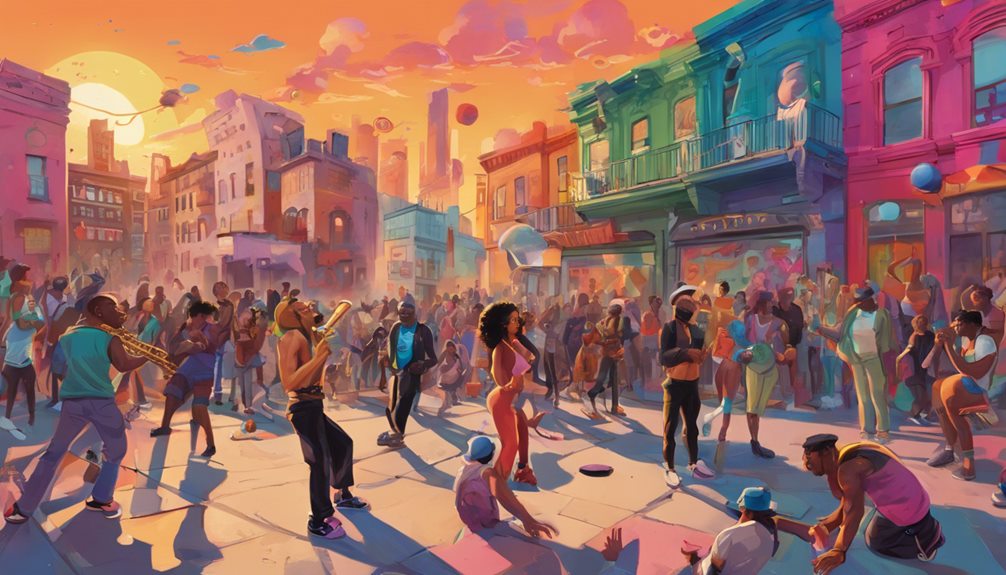
Street performers are transforming urban vistas by democratizing public performance spaces, redefining the sonic identity of cities, and nurturing community building through sound. They occupy public spaces, making art accessible to all, and challenge elitism in culture. By enhancing the sonic identity of cities, they add energy and spontaneity, reflecting the character and history of urban environments. As urban activists, they reclaim public spaces, amplify marginalized voices, and disrupt traditional art norms. By continuing to explore the intersection of sound, community, and urban space, we uncover the intricate ways street performers are revolutionizing local soundscapes and shaping the cultural fabric of our cities.
Democratizing Public Performance Spaces
The urban vista's sonic fabric is often woven from the threads of street performers, who occupy public spaces and inject energy into the city's rhythm. These performers democratize public performance spaces, making creative expression accessible to all. By claiming streets, parks, and plazas as their stages, they challenge traditional notions of art as an elite, exclusive domain. Street performers embody the spirit of freedom, untethered by commercial or institutional constraints, and instead, fueled by passion and a desire for connection.
Public accessibility is a cornerstone of street performance. Without the barriers of ticket prices or venue restrictions, street performers bring art to the people, nurturing a sense of community and shared experience. They transform everyday environments into lively, immersive experiences, inviting passersby to pause, listen, and engage. This democratization of public space additionally enables underrepresented voices to be heard, providing a platform for marginalized communities to express themselves authentically.
Through their creative expression, street performers reclaim public spaces, redefining what is possible and acceptable in these shared areas. They inspire spontaneity, improvisation, and innovation, injecting a sense of dynamism into the urban setting. By doing so, they remind us that art is not the exclusive domain of institutions or elites, but rather a fundamental right, available to all who dare to claim it.
The Sonic Identity of Cities
The sonic identity of a city is shaped by the complex interplay of urban sound patterns, which can be understood as the unique auditory fingerprint of an urban center. These patterns emerge from the dynamic interactions between the built environment, human activity, and cultural expression, generating a distinctive soundscape that reflects the city's character and history. As cities evolve, their rhythms and sound patterns adapt, influencing the way residents and visitors experience and engage with urban space.
Urban Sound Patterns
Beyond city streets' visual façades, a unique aural fabric unfolds, weaving together disparate sounds to form the distinct sonic identity of each urban center. Urban sound patterns are a complex mosaic of sounds, shaped by the city's infrastructure, architecture, and human activity. This symphony of sounds creates a unique sonic fingerprint, distinguishing one city from another.
Urban acoustics play a significant role in shaping these sound patterns. The way buildings, streets, and public spaces are designed affects how sound waves propagate and interact. For instance, narrow alleys can create a sense of sonic intimacy, whereas large public squares can amplify sounds. Furthermore, the diversity of urban dwellers brings a rich sonic diversity, with different cultures and lifestyles contributing to the city's aural environment. Street performers, in particular, add a dynamic layer of sound to this urban soundscape, injecting energy and spontaneity into the sonic identity of a city. By embracing and celebrating this sonic diversity, cities can nurture a sense of community and freedom, allowing individuals to express themselves and connect with their surroundings in a more meaningful way.
City Rhythms Evolve
Scores of cities worldwide boast distinct sonic identities, each shaped by a unique interplay of urban rhythms, cultural practices, and architectural features. These city sounds are more than just a cacophony of noise – they are a reflection of the community's character, values, and history. As cultural fusion becomes a hallmark of modern urbanization, city rhythms are evolving to incorporate diverse influences. Street performers, in particular, are playing a pivotal role in shaping this evolution. By injecting new sounds, styles, and energy into public spaces, they are redefining the sonic identity of cities. The once-familiar rhythms of a city are being rewritten, as buskers and performers bring together disparate cultural threads to create a lively mosaic of sound. This fusion of urban rhythms and cultural practices is giving rise to a new, dynamic soundscape that reflects the diversity and creativity of the city's inhabitants. As city rhythms continue to evolve, they are becoming an integral part of the urban experience, nurturing a sense of community and freedom among residents and visitors alike.
Street Performers as Urban Activists
City squares and pedestrian zones, once mere thoroughfares, are now lively stages where street performers exercise their creative autonomy, challenging and redefining the urban experience. Beyond mere entertainment, these artists are urban activists, leveraging their craft to spark meaningful conversations and inspire social change.
Through activism through art, street performers reclaim public spaces, transforming them into platforms for self-expression and community engagement. Sound, in particular, becomes an influential tool for protest, as musicians and performers use their voices to amplify marginalized voices and challenge the status quo.
| Form of Activism | Description | Impact |
|---|---|---|
| Sound as Protest | Using music and sound to convey social and political messages | Raises awareness about social issues, inspires collective action |
| Guerrilla Performance | Unannounced, unconventional performances that disrupt daily routines | Challenges traditional notions of art and public space, sparks curiosity and engagement |
| Interactive Installations | Immersive experiences that invite audience participation and engagement | Cultivates empathy, encourages community building and social connection |
| Street Theater | Using theater and performance to address social and political issues | Humanizes complex issues, inspires empathy and comprehension |
| Sonic Disruption | Using sound to disrupt and subvert dominant narratives and authority structures | Challenges dominant discourses, creates space for alternative perspectives |
Community Building Through Sound
In the lively fabric of urban soundscapes, street performers weave a unique narrative of community building, where melodies and rhythms become the threads that connect strangers into a cohesive whole. Through their performances, they create opportunities for sound interactions that transcend linguistic and cultural barriers, encouraging a sense of belonging among diverse groups of people. These interactions often lead to cultural exchanges, as passersby from different backgrounds stop to appreciate the music, share stories, and learn from one another.
Street performers become catalysts for community building by providing a shared experience that brings people together. As they set up their instruments or start to dance, they create an atmosphere of inclusivity, inviting everyone to participate and engage with the performance. This collective experience sparks conversations, breaks down social silos, and nurtures empathy among strangers. Additionally, street performers often reflect the cultural diversity of their urban environment, showcasing the rich mosaic of traditions and styles that define the city's identity.
Redefining Urban Entertainment Options
As urban dwellers increasingly crave unique and immersive experiences, street performers are redefining the entertainment environment by injecting a fresh dose of creativity and spontaneity into traditional urban leisure activities. By occupying public spaces, street performers are democratizing access to entertainment, providing an alternative to commercialized and standardized forms of leisure. This shift is empowering local talent, allowing them to showcase their skills and connect with their communities in a more authentic way.
Street performers are additionally facilitating cultural exchange, bringing diverse artistic expressions to the forefront of urban life. From musicians and dancers to poets and jugglers, the range of performances on display reflects the rich cultural mosaic of the city. This exchange not merely enriches the urban soundscape but likewise nurtures a sense of community, as people from different backgrounds come together to appreciate and celebrate their differences.
In this way, street performers are revolutionizing urban entertainment options, providing a platform for self-expression and creativity that is both accessible and inclusive. By embracing the unpredictability and excitement of street performance, cities can reclaim public spaces as lively hubs of cultural activity, where the boundaries between artist and audience are blurred, and the possibilities for connection and inspiration are endless.
The Power of Impromptu Performances
Frequently, the most memorable experiences in urban entertainment are those that unfold unexpectedly, catching audiences off guard and leaving a lasting impression. Impromptu performances by street performers have the ability to captivate and energize urban spaces, nurturing a sense of community and freedom. These unplanned performances often showcase spontaneous creativity, as artists respond to their surroundings and audience in the moment.
| Performance Type | Audience Impact |
|---|---|
| Improvised Music | Encourages audience participation and dancing |
| Interactive Theater | Breaks down barriers between performer and audience |
| Spontaneous Dance | Inspires others to join in and express themselves |
| Unscripted Poetry | Provokes thought and sparks meaningful conversations |
The beauty of impromptu performances lies in their ability to create a shared experience among strangers. By embracing the unpredictability of urban life, street performers are able to tap into the collective energy of the crowd, nurturing a sense of connection and shared joy. As audiences engage with these performances, they are encouraged to let go of their inhibitions and participate in the creative process. This fusion of art and audience engagement has the potential to redefine urban entertainment, making it more dynamic, inclusive, and memorable. By embracing the ability of impromptu performances, cities can become lively hubs of creative expression, where freedom and spontaneity reign supreme.
Revitalizing Neglected City Areas
Street performers have played a significant role in revitalizing neglected city areas, breathing new life into once-forgotten spaces. Through their presence, urban renewal efforts are accelerated, and lively spaces emerge, reinvigorating the local atmosphere. As a result, forgotten corners are revived, showcasing the transformative influence of street performance in urban regeneration.
Urban Renewal in Action
One of the most significant challenges facing urban planners is the revitalization of neglected city areas, where decay and disinvestment have taken their toll on the community. These areas, often plagued by crime, poverty, and urban blight, can become lively hubs of activity with the right approach. Street performers, with their unique blend of music, dance, and public art, are playing an essential role in urban renewal efforts. By bringing cultural exchange and community engagement to these neglected spaces, they are helping to revitalize and transform them into thriving public areas. Through their performances, street artists are cultivating a sense of community and ownership, encouraging residents to reclaim and take pride in their surroundings. As a result, urban planners are taking note of the positive impact of public art and cultural exchange on urban renewal, recognizing the potential for street performers to be key catalysts in revitalizing neglected city areas.
Vibrant Spaces Emerge
Urban environments, once marred by neglect and disinvestment, are being transformed into lively hubs of activity as street performers bring new life to these areas. The spirited energy of street performers has awakened dormant city spaces, infusing them with a renewed sense of purpose and liveliness. As musicians, dancers, and artists take to the streets, they create immersive sensory experiences that captivate passersby and draw them in. Street art, in particular, has become a potent tool for revitalization, as vivid murals and installations add a splash of color and creativity to once-drab cityscapes. These dynamic public spaces now pulsate with the rhythm of freedom, inviting individuals to express themselves and connect with their community. As street performers continue to enliven these areas, they nurture a sense of ownership and pride among locals, eventually redefining the urban environment and reinvigorating the human experience.
Forgotten Corners Revived
Beyond the lively streets, forgotten corners of the city lay dormant, waiting to be rediscovered. Street performers have taken it upon themselves to breathe new life into these neglected areas, transforming them into dynamic hubs of creative expression. In doing so, they have uncovered hidden gems that were previously unknown to the general public.
These performers have initiated a quest of sound exploration, experimenting with the unique acoustic properties of each location. From abandoned alleys to neglected parks, they have turned these forgotten spaces into impromptu stages, showcasing their talents to passersby. In the process, they have drawn attention to the beauty and potential of these overlooked areas, inspiring locals and visitors alike to explore and appreciate them. Their spontaneous performances not only breathe new life into these spaces but also create a sense of community among those who stop to listen. By embracing unconventional venues, they encourage others to step beyond mainstream entertainment and explore underground music scenes that thrive in unexpected corners of the city. This movement transforms forgotten places into vibrant cultural hubs, redefining how and where music can be experienced.
As a result, forgotten corners of the city are being revitalized, and a new wave of urban renewal is underway. By reclaiming these spaces, street performers are not merely enriching the local soundscape but also nurturing a sense of community and creativity. Their efforts have sparked a renewed interest in the city's hidden gems, encouraging others to join in the pursuit of sound exploration and urban discovery.
Unconventional Venues for Artists
Street performers have long been known to thrive in unexpected locations, leveraging the unique characteristics of each site to amplify their performances. This adaptability has led to the emergence of unconventional venues, where artists can showcase their talents and engage with diverse audiences. Pop-up concerts in alleyways, guerrilla gigs on rooftops, and impromptu performances in parking garages have become increasingly popular, allowing musicians to break free from traditional concert halls and connect with their communities in innovative ways.
These unconventional venues offer a sense of liberation, as artists can express themselves freely, unbound by the constraints of traditional performance spaces. The unpredictability of these locations additionally encourages a sense of excitement and spontaneity, as both performers and spectators are drawn into the moment, unscripted and unbridled. Furthermore, these venues often become incubators for creativity, as artists are forced to think outside the box and adapt to their surroundings, resulting in fresh and innovative performances.
Frequently Asked Questions
Are Street Performers Required to Have Permits or Licenses?
In terms of street performance, permit regulations and licensing requirements vary greatly across jurisdictions. Although some cities have relaxed policies, others require performers to obtain permits or licenses, often with associated fees. In many cases, these regulations aim to balance artistic expression with public safety and noise concerns. Nonetheless, overly restrictive licensing requirements can stifle creativity and limit performers' ability to share their talents with the public.
How Do Street Performers Handle Inclement Weather Conditions?
Street performers demonstrate remarkable weather resilience, adapting their performances to thrive in various conditions. When faced with inclement weather, they employ creative solutions, such as relocating to covered areas, adjusting their setup, or even incorporating the weather into their act. Through performance adaptations, they guarantee their art remains accessible to the public, promoting a sense of community and freedom in public spaces. By embracing the unpredictability of outdoor performances, street artists showcase their resourcefulness and dedication to their craft.
Can Anyone Become a Street Performer, or Are There Age Restrictions?
The streets are paved with endless opportunities, and becoming a street performer is a dream within anyone's grasp! In reality, there are no age restrictions to hold you back. Street performer demographics showcase a diverse range of ages, from spry youth to seasoned seniors, all united by their passion for performance. Age inclusivity is the name of the game, and the only requirement is a dash of creativity and a willingness to plunge your talent with the world.
Do Street Performers Typically Perform Solo or in Groups?
In regard to street performance, artists often have the flexibility to choose their preferred format. Whereas some thrive as solo acts, showcasing their unique individual styles, others prefer to collaborate in groups, leveraging the energy of group dynamics to captivate audiences. Both approaches offer distinct benefits, allowing performers to tailor their presentation to their artistic vision and connect with onlookers in a way that resonates with their creative expression.
Are Tips or Donations the Primary Source of Income for Performers?
In relation to the financial sustainability of street performances, tips and donations play a significant role. In fact, they are often the primary source of income for many performers. This is due to performance earnings being directly tied to audience engagement, with crowds drawn in by enthralling acts and inclined to show appreciation through monetary gestures. Consequently, performers rely heavily on the goodwill of passersby to support their creative endeavors, nurturing a sense of community and reciprocity.