
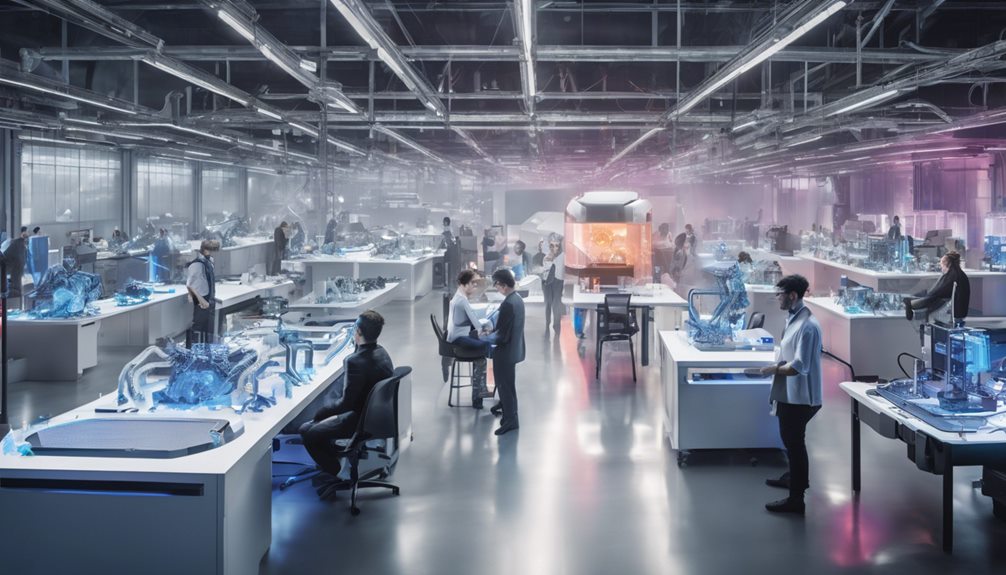
3D printing is reshaping entire industries by revolutionizing production methods. This technology allows for the creation of intricate designs and customized products, greatly enhancing efficiency and reducing material waste. In healthcare, it enables personalized medical devices and faster prototyping. Aerospace and automotive sectors benefit from reduced lead times and lightweight components. Moreover, 3D printing encourages sustainable practices by promoting on-demand production, minimizing excess inventory, and utilizing eco-friendly materials. Industries are adopting these innovations to meet consumer demand for customization and to remain competitive. Explore how these shifts are affecting various sectors and their future trajectories.
Overview of 3D Printing Technology
At its core, 3D printing technology, as well known as additive manufacturing, involves the layer-by-layer construction of objects from digital models. This transformative process allows for unparalleled design flexibility, empowering engineers and designers to create intricate geometries that would be nearly impossible with traditional manufacturing methods. By leveraging computer-aided design (CAD) software, creators can produce detailed parts customized to specific requirements, thereby eliminating the constraints associated with conventional techniques.
Moreover, 3D printing greatly improves production efficiency. The technology facilitates rapid prototyping, enabling businesses to accelerate the development cycle and bring products to market faster than ever before. With the ability to produce items on demand, companies can minimize inventory costs and reduce waste, ensuring a more sustainable approach to manufacturing. This efficiency is particularly crucial in an increasingly competitive environment where time-to-market can dictate success.
In addition, 3D printing promotes a paradigm shift in decentralized production. With the capability to produce high-quality components in various locations, organizations can strategically position themselves closer to their customers, improving responsiveness and reducing logistical challenges. This capability not only streamlines operations but also represents a considerable opportunity for businesses to gain a competitive edge.
As industries continue to embrace 3D printing, the integration of advanced materials and technologies will further expand its potential, solidifying its role as a cornerstone in the future of manufacturing and design. The implications are profound, positioning organizations to thrive in an era defined by innovation and agility.
Impact on Healthcare Sector
Increasingly, 3D printing is revolutionizing the healthcare sector by enabling the production of patient-specific medical devices and implants. This transformative technology facilitates the creation of customized surgical models that allow for precise preoperative planning, greatly improving surgical outcomes. By tailoring medical implants to the unique anatomy of individual patients, healthcare providers can achieve unparalleled levels of fit and functionality, thereby elevating the standard of care.
In the domain of bioprinting applications, the potential to fabricate living tissues and organs represents a groundbreaking frontier in regenerative medicine. This innovation not only addresses the shortage of donor organs but likewise paves the way for advanced pharmaceutical development, with the capability to create complex tissue structures for drug testing and toxicity assessments.
Moreover, 3D printing is driving dental advancements, enabling the production of custom dental implants and orthodontic devices that align perfectly with patient specifications. In orthopedics, innovations in 3D-printed prosthetic devices are transforming the rehabilitation environment, offering lightweight, durable solutions that improve mobility and comfort for amputees.
The healthcare sector's embrace of 3D printing technology is not merely an evolution; it is a revolution, promoting a new era of patient-specific solutions. As hospitals and clinics adopt these state-of-the-art practices, they stand at the forefront of a healthcare transformation that promises to redefine outcomes, improve efficiencies, and in the end save lives. The implications of this technology extend far beyond mere convenience, heralding a new paradigm in medical excellence.
Transformation in Aerospace Manufacturing
The advancements in 3D printing technology are not merely reshaping the healthcare sector but are furthermore making considerable strides in aerospace manufacturing. The integration of additive manufacturing into aerospace design is transforming the industry by enabling the creation of complex geometries that were previously deemed impossible or prohibitively expensive. This transformative technology allows for the production of lightweight components, which directly improves fuel efficiency and overall performance of aircraft.
One of the most compelling advantages of 3D printing in aerospace is its ability to reduce lead times dramatically. Traditional manufacturing methods often require extensive tooling and lengthy production schedules, but additive manufacturing streamlines the process, allowing companies to respond swiftly to market demands and innovate without the constraints of conventional manufacturing techniques. This agility positions aerospace firms to maintain competitiveness in a swiftly evolving environment.
Moreover, the customization capabilities inherent in 3D printing facilitate customized solutions for specific aerospace applications, from prototyping to the production of end-use parts. By minimizing material waste and optimizing resource utilization, additive manufacturing not only contributes to sustainability efforts but furthermore drives down costs—an important factor in an industry where margins are critical.
As aerospace design continues to evolve, the adoption of 3D printing will merely expand, leading to more advanced, efficient, and sustainable aircraft. The potential for this technology to transform aerospace manufacturing underscores its pivotal role in shaping the future of flight. Embracing additive manufacturing is no longer optional; it is a strategic imperative for industry leaders aiming to soar above the competition.
Revolutionizing Automotive Production
The automotive industry is experiencing a significant transformation through the integration of 3D printing technology. This innovation facilitates rapid prototyping, enabling manufacturers to expedite design processes as well as producing lightweight components that improve vehicle performance. Furthermore, 3D printing offers unparalleled customization and personalization options, allowing consumers to tailor their vehicles to meet specific preferences and needs.
Rapid Prototyping Advantages
Revolutionizing the automotive industry, rapid prototyping has emerged as a game-changer, enabling manufacturers to streamline the design and production process. This innovative approach leverages advanced technologies to improve various aspects of automotive production, delivering unparalleled advantages that empower companies to stay ahead in a competitive market.
- Speed Advantages: Rapid prototyping notably reduces lead times, allowing for quicker iterations and faster time-to-market.
- Cost Efficiency: By minimizing material waste and reducing labor costs, manufacturers can optimize their budgets during the maintenance of high-quality standards.
- Design Flexibility: The ability to easily modify designs encourages iterative design processes, enabling teams to explore multiple concepts without the constraints of traditional methods.
- Material Diversity: Access to a wide range of materials improves product performance and aesthetic appeal, ensuring that manufacturers can meet diverse consumer demands.
As automotive companies embrace this transformative method, they benefit from improved collaboration potential among teams, enhanced production scalability, and heightened market responsiveness. Rapid prototyping is not merely a trend; it is a strategic imperative that positions manufacturers for success in a constantly changing environment.
Lightweight Component Manufacturing
As rapid prototyping reshapes the automotive environment, lightweight component manufacturing is emerging as a pivotal factor in enhancing vehicle performance and efficiency. By leveraging advanced 3D printing technologies, manufacturers can achieve unprecedented levels of material selection and design optimization, resulting in components that greatly reduce weight without compromising structural integrity.
This innovative approach encourages manufacturing efficiency, enabling faster production cycles and seamless production scalability. As a result, automakers can respond adeptly to market expansion and evolving consumer demands, while maintaining strict quality control standards throughout the supply chain. The integration of state-of-the-art technology not only drives cost reduction but also facilitates application diversity across various vehicle types, from electric cars to high-performance sports models.
As the industry continues to embrace lightweight components, the synergy between design and manufacturing will reveal new possibilities, allowing manufacturers to produce vehicles that are not only lighter but also more fuel-efficient and environmentally friendly. This transformative shift underscores the critical role of lightweight component manufacturing in the automotive sector, positioning it as a key player in the quest for sustainable and high-performance mobility solutions.
Customization and Personalization Options
Innovation in customization and personalization is transforming automotive production, allowing manufacturers to customize vehicles to meet the unique preferences of individual consumers. The advent of 3D printing technology facilitates mass customization, empowering customers to select personalized products that align with their distinct tastes and lifestyles.
This seismic shift in automotive manufacturing is characterized by several key advantages:
- Unique Aesthetic Features: Consumers can choose bespoke design elements, from body kits to interior finishes, ensuring their vehicle stands out.
- Functional Improvements: Customized modifications, such as custom-fit storage solutions or ergonomic controls, improve user experience and functionality.
- Rapid Prototyping: 3D printing allows for quick iterations of designs, enabling manufacturers to efficiently respond to consumer feedback and preferences.
- Sustainability: Personalized products can be made with less waste, as 3D printing optimizes material usage, aligning with eco-conscious consumer values.
As automotive production embraces this paradigm, the ability to create highly customized vehicles satisfies individual desires while reinforcing a sense of ownership, driving customer loyalty and engagement in an increasingly competitive market.
Enhancements in Consumer Goods
The integration of 3D printing technology in consumer goods is transforming the environment of product customization and sustainability. This innovation allows for customized designs that meet individual consumer preferences as well as minimizing waste through streamlined production processes. As companies adopt these practices, the potential for improved customer engagement and reduced environmental impact becomes increasingly significant.
Customization Opportunities
3D printing is revolutionizing the way consumer goods are designed and produced, offering unprecedented customization opportunities that cater to individual preferences. This transformative technology enables brands to deliver personalized products at an astounding pace, ensuring that consumers receive exactly what they desire.
The following are key aspects where 3D printing improves customization in consumer goods:
- Bespoke Designs: Consumers can now create unique prototypes customized to their specifications, allowing for distinctiveness in a crowded market.
- Customized Solutions: With adaptive technologies, companies can design specialized items that address specific consumer needs, improving functionality and user satisfaction.
- Individualized Manufacturing: 3D printing facilitates on-demand production, reducing waste and inventory costs as it empowers brands to offer a broader range of custom applications.
- Improved Consumer Engagement: By involving customers in the design process, brands nurture loyalty and satisfaction through personalized experiences.
As 3D printing continues to evolve, it amplifies the potential for customized consumer goods, creating a significant shift in the direction of individualized solutions that resonate deeply with today's discerning consumers. This paradigm drives innovation and transforms the consumer experience into one of collaboration and empowerment.
Sustainable Production Practices
As consumer preferences shift in the direction of sustainability, 3D printing is furthermore playing a crucial role in promoting sustainable production practices within the consumer goods sector. This transformative technology empowers manufacturers to utilize eco-friendly materials, thereby minimizing environmental impact and advancing the principles of a circular economy.
By enabling the use of biodegradable and recyclable materials, 3D printing allows brands to produce goods that align with the growing demand for sustainability during the maintenance of high performance and durability. This process not only reduces waste but also encourages innovation in product design and development, allowing for the production of customized items with minimal excess material.
Moreover, the localized nature of 3D printing diminishes the need for extensive transportation, leading to a significant reduction in carbon emissions. As companies embrace these sustainable production practices, they likewise cultivate a deeper connection with conscious consumers who prioritize ethical and environmentally responsible choices.
In essence, 3D printing is not merely a technological advancement; it is a catalyst for redefining the realm of consumer goods through sustainable innovation and resilience, ensuring a prosperous future rooted in environmentally sound practices.
Innovations in Construction Industry
Although traditional construction methods have long dominated the industry, recent innovations in 3D printing are revolutionizing how structures are designed and built. This transformative technology improves construction efficiency by enabling on-site manufacturing, drastically reducing project timelines as it maintains structural integrity. The ability to utilize diverse materials through 3D printing not just encourages innovative designs but also supports waste minimization, making the construction process more sustainable and cost-effective.
Key innovations in the construction industry driven by 3D printing include:
- Design Flexibility: Architects and engineers can now push the boundaries of creativity, crafting complex geometries that were previously unattainable with conventional methods.
- Material Diversity: The use of various materials, including concrete, metals, and polymers, allows for customized solutions that meet specific structural and aesthetic requirements.
- Cost Reduction: By greatly lowering labor costs and minimizing material waste, 3D printing enables construction projects to be completed within budget constraints without sacrificing quality.
- Rapid Prototyping: Builders can swiftly create prototypes of structures, facilitating immediate feedback and adjustments, which in the end leads to improved final designs.
Benefits for the Fashion Industry
The integration of 3D printing in the fashion industry presents numerous advantages, particularly in sustainable material innovation. This technology enables designers to utilize eco-friendly materials as well as minimizing waste, thereby promoting environmentally conscious practices. Furthermore, 3D printing facilitates unprecedented levels of customization and personalization, allowing consumers to engage with fashion in a more individualized manner.
Sustainable Material Innovation
Sustainable material innovation is revolutionizing the fashion industry by introducing eco-friendly alternatives that reduce environmental impact during the maintenance of aesthetic appeal. As consumers increasingly demand sustainable practices, fashion brands are leveraging 3D printing technology to create groundbreaking materials that align with these values.
Key benefits of sustainable material innovation include:
- Biodegradable Filaments: Utilizing biodegradable filaments guarantees that products can decompose naturally, minimizing landfill waste and pollution.
- Recycled Materials: The incorporation of recycled materials into fashion collections greatly reduces the consumption of virgin resources, promoting a circular economy.
- Reduced Carbon Footprint: 3D printing minimizes energy consumption and waste during production, aligning with global efforts to combat climate change.
- Customization Potential: Innovative materials can be customized to meet specific consumer demands, enhancing both sustainability and market appeal.
Customization and Personalization Options
Advancements in 3D printing technology are enabling fashion brands to offer unparalleled customization and personalization options, catering to the unique preferences of individual consumers. This innovation paves the way for mass personalization, where bespoke solutions become the norm rather than the exception. Brands can now create customized designs that reflect individual preferences, resulting in unique products that resonate deeply with consumers.
The ability to produce customized items improves consumer engagement, encouraging a sense of ownership and connection to the brand. This design flexibility empowers users to participate in the creation process, turning them into active contributors rather than passive consumers. As a result, brands can tap into niche markets that value creative expression and personalized offerings.
Moreover, the integration of 3D printing into fashion allows for rapid prototyping and shorter production cycles, enabling brands to respond swiftly to changing consumer demands. This agility in design and production not just strengthens brand loyalty but also positions companies at the forefront of innovation. In the end, the intersection of 3D printing and personalization is revolutionizing the fashion domain, inviting consumers to express their individuality through bespoke creations.
Advances in Education and Research
Innovations in 3D printing technology are greatly enhancing the environment of education and research. This advanced technology is not just transforming traditional pedagogical approaches but also empowering institutions to produce impactful educational tools that encourage skill development and student engagement. Its integration into curricula promotes interactive learning and raises academic partnerships, leading to more robust research applications.
The advantages of 3D printing in education can be summarized as follows:
- Cost Efficiency: Institutions can create prototypes and models in-house, greatly reducing the financial burden associated with outsourcing production.
- Material Science Exploration: Students gain hands-on experience in material selection and manipulation, enhancing their comprehension of design thinking principles and real-world applications.
- Collaborative Projects: 3D printing facilitates teamwork among students and educators, allowing for the co-creation of projects that build critical thinking and problem-solving skills.
- Enhanced Engagement: The tactile nature of 3D printing captivates students, making learning more engaging and memorable, which translates into improved retention of complex concepts.
As these advantages illustrate, 3D printing is not merely a technological novelty; it is a transformative force that is redefining educational environments. By leveraging this technology, educational institutions can prepare students to thrive in an increasingly complex world, ensuring they possess the necessary skills to innovate and lead in their respective fields. The future of education is being reshaped through 3D printing, marking a considerable shift towards a more dynamic and effective learning environment.
Sustainability and Waste Reduction
3D printing is revolutionizing approaches to sustainability and waste reduction across various industries. By enabling the production of components on-demand, this technology greatly minimizes material waste and improves resource efficiency. Traditional manufacturing methods often lead to substantial scrap material, whereas additive manufacturing builds objects layer by layer, utilizing only the necessary material for each item. This capability not merely reduces excess waste but additionally cuts down on the energy consumed during production processes.
Furthermore, 3D printing supports the principles of a circular economy, where products are designed for longevity, reuse, and recycling. Manufacturers can create items customized for disassembly, allowing for easier recycling or repurposing of materials at the end of their life cycle. This shift in direction of sustainable design cultivates an environment where materials are continuously reused, contributing to a closed-loop system that minimizes resource extraction and waste generation. In the kitchen remodeling process, 3D printing enables the creation of custom fixtures and fittings using recycled or biodegradable materials, reducing reliance on traditional manufacturing methods that generate excess waste. Additionally, homeowners can replace individual components rather than discarding entire units, further promoting sustainability. This approach not only conserves valuable resources but also lowers costs while maintaining high-quality, durable designs.
Industries such as aerospace, automotive, and healthcare are already utilizing the potential of 3D printing to create lightweight, efficient components that improve performance during the reduction of environmental impact. By adopting this innovative technology, organizations can position themselves as leaders in sustainability, appealing to increasingly eco-conscious consumers and stakeholders.
Future Trends in 3D Printing
The growing emphasis on sustainability and waste reduction is paving the way for new developments in additive manufacturing. As industries continue to evolve, the future of 3D printing promises to be defined by transformative trends that utilize smart materials and improve digital fabrication. The following key developments are anticipated to reshape the environment:
- Material Advancements: Innovations in smart materials will enable 3D printing technologies to create more functional, durable, and sustainable products. This will expand design freedom and boost product performance.
- Supply Chain Optimization: As market growth accelerates, companies will increasingly integrate 3D printing into their supply chains, reducing lead times and minimizing inventory costs. This shift will facilitate just-in-time production and decreased waste.
- Education Initiatives: To overcome integration challenges and regulatory hurdles, educational programs will proliferate, equipping professionals with the necessary skills to utilize 3D printing's potential effectively.
- Consumer Awareness: Growing awareness among consumers regarding the benefits of 3D printing will drive demand for customized products, pushing manufacturers to adopt this technology in response to evolving market needs.
As these trends unfold, industries must navigate the intricacies of regulatory frameworks and embrace innovative strategies to fully capitalize on the transformative capability of 3D printing. The future will certainly witness a paradigm shift, where smart materials, efficient supply chains, and consumer-driven design converge, establishing 3D printing as an indispensable tool for industry leaders.
Frequently Asked Questions
What Materials Are Commonly Used in 3D Printing?
In the domain of 3D printing, diverse materials propel innovation and performance. Biodegradable plastics promote sustainability, whereas metal powders improve structural integrity. Ceramic composites offer durability, and polymer filaments provide versatility in design. Composite materials combine strengths for maximum functionality, and printable electronics enable the integration of circuitry into models. Each material serves a unique purpose, shaping the capabilities of 3D printing and empowering industries to push boundaries and achieve unprecedented advancements.
How Does 3D Printing Affect Traditional Manufacturing Jobs?
The emergence of 3D printing technology has significant implications for traditional manufacturing jobs, primarily through job displacement and the necessity for skills adaptation. As automated systems and additive manufacturing processes streamline production, lower-skilled positions may decline. As a result, the workforce must pivot in the direction of acquiring new skills relevant to operating advanced machinery and software. Organizations must invest in training programs to guarantee employees can thrive in this evolving environment, maintaining competitiveness in an increasingly automated setting.
What Are the Safety Concerns With 3D Printing?
Safety concerns associated with 3D printing primarily revolve around filament toxicity and workspace ventilation. Many filaments release harmful volatile organic compounds (VOCs) during the printing process, which can pose health risks if inhaled. Furthermore, inadequate ventilation in the workspace can exacerbate these risks, leading to an accumulation of toxic fumes. To guarantee a safe environment, it is imperative to implement effective ventilation systems and select low-toxicity materials for printing.
Can 3D Printing Be Used for Food Production?
Yes, 3D printing can be employed for food production, a process commonly referred to as food printing. This culinary innovation enables the precise layering of edible materials to create customized meals, enhancing both presentation and flavor profiles. By utilizing state-of-the-art technology, chefs and food manufacturers can design intricate shapes and textures, catering to diverse dietary needs and preferences. As a result, food printing stands to transform traditional cooking practices and raise gastronomic experiences.
How Can Individuals Get Started With 3D Printing at Home?
With over 70% of individuals considering 3D printing as a viable hobby, initiating this innovative expedition at home is increasingly accessible. Beginners should start with user-friendly printers like the Creality Ender 3 and explore online resources for home projects. Crucial tips include acquiring proficiency in basic software such as TinkerCAD, joining local maker communities for support, and beginning with simple designs to build confidence. This foundational knowledge empowers individuals to maximize the potential of 3D printing technology.