
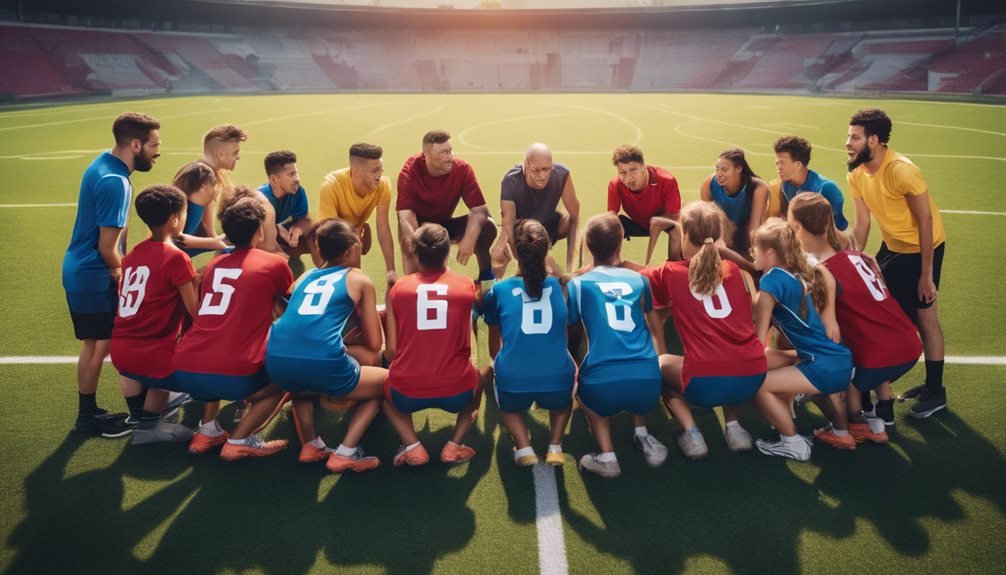
Effective leadership drives success in team sports by cultivating cohesion, establishing clear goals, and nurturing a positive culture. Leaders communicate expectations and provide feedback, helping athletes comprehend their roles. They use emotional intelligence to build trust and guide teams through challenges. Coaches and captains play key roles, making strategic decisions, mediating conflicts, and motivating players. This collaborative environment encourages accountability and resilience, turning adversities into growth opportunities. By celebrating small victories, teams boost morale and commitment. Grasping how these leadership qualities come together can reveal even more insights into their essential impact.
Importance of Leadership in Sports
Leadership in sports plays a vital role in driving a team's success and cohesion. Effective leaders employ various leadership styles to improve team dynamics and promote a culture of collaboration. By implementing customized communication strategies, they guarantee that every team member understands their role and the collective vision. This clarity allows for seamless decision making during pivotal moments in games.
Moreover, strong leaders excel in conflict resolution, addressing issues before they escalate. Their emotional intelligence enables them to gauge team morale and respond to individual needs, reinforcing trust building within the group. A leader's ability to model desired behaviors sets the standard for performance, encouraging athletes to emulate these traits.
Vision setting is another significant aspect of sports leadership. Leaders articulate a clear, compelling direction, inspiring team members to aim for excellence. They provide performance feedback that is constructive and timely, enabling athletes to recognize their strengths and identify areas for improvement. This ongoing dialogue promotes an environment where continuous growth becomes the norm.
Ultimately, the importance of leadership in sports cannot be overstated. It shapes a team's identity, influences its culture, and impacts overall performance. When leaders prioritize trust building and role modeling, they cultivate a resilient team capable of overcoming challenges together. Through adept leadership, teams achieve their goals and develop lasting bonds that extend beyond the playing field, creating a legacy of success and camaraderie.
Key Qualities of Effective Leaders
Effective leaders in team sports embody a range of key qualities that greatly improve their ability to guide and inspire their teams. These leaders don't just push their teams toward victory; they cultivate an environment where each player feels valued and empowered. Their effectiveness hinges on several critical attributes:
- Communication skills: They articulate strategies and feedback clearly, guaranteeing everyone understands their roles.
- Emotional intelligence: By recognizing and managing their own emotions and those of others, they create a supportive atmosphere that nurtures team morale.
- Decision making: They analyze situations quickly and choose the best course of action, often under pressure.
- Conflict resolution: When tensions arise, effective leaders mediate disputes, promoting harmony within the group.
- Vision setting: They establish clear goals that align with the team's aspirations, inspiring players to aim for collective success.
Moreover, adaptability traits allow these leaders to pivot strategies as needed, responding to the ever-changing dynamics of sports. Trust building is essential, as they cultivate a bond that encourages open dialogue and collaboration. Utilizing feedback mechanisms, they guarantee continuous improvement, while inclusivity practices motivate every team member to contribute their unique strengths. Eventually, empowerment strategies enable athletes to take ownership of their roles, leading to heightened performance and cohesion. Fundamentally, effective leaders in team sports create a resilient and motivated team, ready to tackle challenges head-on.
Roles of Coaches and Captains
In team sports, coaches and captains play essential roles that greatly impact performance. The coach's strategic influence shapes the team's tactics and preparation, whereas the captain's motivational role inspires players to give their best. Together, they create a cohesive unit that aims for success on and off the field.
Coach's Strategic Influence
Coaches play a pivotal role in shaping the dynamics of team sports, guiding athletes not just in skill development but likewise in strategy execution. Their influence extends beyond basic training; effective coach communication cultivates an environment where strategies can be adapted dynamically. This tactical adaptability is essential for responding to opponents and game situations. Additionally, the impact of coaching on potential is evident in how athletes evolve under structured guidance, gaining confidence and resilience in high-pressure situations. A coach’s ability to inspire and mentor can unlock hidden talents, driving individuals and teams toward peak performance. Ultimately, strong coaching fosters a winning mentality, ensuring that players remain motivated and focused on continuous improvement.
Successful coaches often exhibit the following characteristics:
- Visionary Leadership: They create a clear game plan that aligns with team strengths.
- Analytical Skills: They dissect opponents' strategies, allowing for informed adjustments.
- Emotional Intelligence: They understand players' needs, nurturing trust and open dialogue.
- Collaborative Mindset: They engage players in strategy discussions, enhancing team buy-in.
- Decisiveness: They make timely decisions during games, impacting the team's performance directly.
Captain's Motivational Role
Although coaches lay the foundation for strategy and skill development, team captains play a significant role in motivating their teammates. The captain's influence on team dynamics can't be overstated; they serve as a bridge between players and coaches, ensuring that motivational strategies resonate throughout the squad. Effective communication is vital, as captains must articulate the team's vision during nurturing an environment of trust building and player empowerment.
Captains often employ various leadership styles, adapting their approach to suit the emotional intelligence of their teammates. By comprehending individual motivations, they can tailor their encouragement to drive performance. This adaptability is particularly valuable in conflict resolution, where a captain's ability to mediate disagreements can strengthen relationships and improve team cohesion.
Moreover, captains instill a sense of accountability, encouraging players to take ownership of their roles. Through vision setting, they inspire teammates to aspire toward collective goals, reinforcing commitment and drive. In the end, a captain's motivational role is pivotal in creating a resilient team that thrives under pressure, pushing each player to achieve their best as they navigate the challenges of competition.
Building Team Cohesion
Building team cohesion is essential for achieving success in any sport, as it nurtures a sense of unity and purpose among players. Effective leaders understand that cultivating strong team dynamics requires intentional strategies. By implementing trust-building activities and open communication strategies, they create an environment where players feel valued and understood.
To improve team cohesion, leaders can focus on various key elements:
- Shared Goals: Establish common objectives that drive the team's collective effort.
- Role Clarity: Clearly define each player's responsibilities to avoid confusion and overlap.
- Emotional Intelligence: Utilize leaders' awareness of team members' feelings to guide interactions and decision-making.
- Conflict Resolution: Encourage constructive dialogue to address disagreements and maintain harmony.
- Feedback Mechanisms: Implement regular check-ins to gauge team sentiment and promote relationship building.
Inclusive practices are significant in ensuring that all voices are heard, promoting an atmosphere of respect and collaboration. By valuing each individual's contributions, leaders can cultivate deeper bonds among teammates. Additionally, leaders should prioritize continuous improvement through feedback, allowing players to adapt and grow together.
Ultimately, strong team cohesion not only improves performance but also nurtures a lasting camaraderie that can carry a team through challenges. When players feel connected and committed to one another, they are more likely to achieve excellence on the field, as their unity becomes a significant driving force behind their success.
Motivating Through Adversity
In team sports, leaders play an essential role in motivating players through tough times. They build resilience together, inspire confidence amid challenges, and celebrate small victories to keep spirits high. By focusing on these elements, they nurture a strong sense of unity and determination within the team.
Building Resilience Together
Team sports often present challenges that test players' limits and resolve. Effective leadership transforms these adversities into opportunities for growth, nurturing resilience through shared experiences. By cultivating a culture of collective strength, teams can develop mental toughness and emotional support systems that are vital during tough times. Trust building lays the foundation for conflict resolution, allowing teammates to navigate difficulties with confidence.
Leaders can implement the following strategies to improve resilience:
- Encourage a growth mindset, emphasizing that setbacks are part of the learning process.
- Promote adaptive strategies that allow players to adjust their approaches when faced with challenges.
- Encourage peer support, creating an environment where teammates uplift one another.
- Maintain a unity focus, reminding the team of their common goals and aspirations.
- Facilitate open communication to strengthen relationships and resolve conflicts effectively.
In doing so, leaders not just motivate their teams but additionally instill a sense of unity that drives them forward. Through these shared experiences, athletes become more resilient, ready to face any obstacle together. This collective resilience solidifies the team's foundation, preparing them for success both on and off the field.
Inspiring Confidence Amid Challenges
Facing adversity head-on can often reveal the true potential of a team. When challenges arise, effective leaders utilize emotional intelligence to inspire confidence, nurturing a growth mindset among team members. They skillfully manage pressure, ensuring that team dynamics remain strong. By aligning the team's vision, leaders create a unified front that thrives amidst uncertainty.
| Leadership Actions | Impact on Team |
|---|---|
| Trust Building | Improves collaboration |
| Performance Feedback | Drives continuous improvement |
| Conflict Resolution | Maintains harmony |
| Pressure Management | Boosts resilience |
Leaders consistently provide performance feedback, encouraging open communication and promoting conflict resolution. This approach not only strengthens trust but empowers individuals to confront challenges collectively. As team members feel supported, their confidence grows, enabling them to take calculated risks and pursue excellence.
Inspiring confidence amid challenges isn't solely about motivating players; it involves cultivating a culture where every individual feels valued. This dynamic environment, fueled by strong leadership, sets the stage for remarkable achievements, transforming obstacles into opportunities for growth and success.
Celebrating Small Victories
Small victories often serve as crucial milestones in a team's path through adversity. By celebrating progress and recognizing effort, leaders can instill resilience and motivation within their teams. Acknowledging these small wins not just boosts morale but additionally reinforces a culture of perseverance.
Effective leaders can implement several strategies to celebrate small victories:
- Set achievable goals: Break down larger objectives into smaller, manageable tasks.
- Public recognition: Acknowledge individual and team achievements in meetings or through team communication channels.
- Celebrate together: Organize team gatherings or events to commemorate successes, promoting camaraderie.
- Provide constructive feedback: Highlight what worked well to encourage continued effort and improvement.
- Encourage reflection: Facilitate discussions on lessons learned from each victory, reinforcing growth.
Through these practices, leaders can create an environment where every small success is valued. This not just helps teams navigate challenges but equally cultivates a sense of purpose. By consistently recognizing effort and celebrating progress, teams become more unified and motivated, ultimately steering them toward greater achievements.
Establishing a Culture of Accountability
A strong culture of accountability can greatly improve a team's performance and cohesion. When leaders actively promote accountability, they set a tone that encourages peer accountability among team members. This requires leadership buy-in, where coaches and captains model responsible behavior, demonstrating commitment to performance expectations. By establishing clear benchmarks, leaders facilitate goal alignment that resonates throughout the team.
Trust building is essential in this process. Team members must feel safe to share feedback openly, nurturing an environment where feedback loops are not just welcomed but encouraged. Leaders can augment this process by ensuring consistency enforcement—holding every member to the same standards, which reinforces the importance of responsibility sharing.
Open communication plays an important role in cultivating accountability. When team members can voice concerns and discuss challenges without fear, it strengthens their collective resolve. Role modeling is equally significant; leaders must embody the accountability they expect from their players. By showing how to accept responsibility for both successes and failures, they inspire their teams to do the same.
Ultimately, establishing a culture of accountability leads to improved performance, as athletes understand their roles and contributions to the team's success. When accountability becomes a shared value, the team thrives in competitions and develops a deeper sense of unity and purpose, equipping them to tackle challenges both on and off the field.
Case Studies of Successful Leadership
Throughout sports history, numerous case studies highlight the impact of effective leadership in team dynamics. These examples demonstrate how various leadership styles and communication strategies can enhance a team's performance and cohesion. Coaches like Phil Jackson and Bill Belichick exemplify how vision articulation, emotional intelligence, and role modeling can create successful environments.
Consider the following key elements that define successful leadership in sports:
- Leadership Styles: Adapting styles to fit team needs builds trust and respect.
- Communication Strategies: Transparent and open communication strengthens relationships among team members.
- Decision Making Processes: Inclusive decision-making engages players, enhancing commitment and buy-in.
- Conflict Resolution: Proactive approaches to conflict promote a positive team atmosphere and mitigate disruptions.
- Performance Evaluation: Regular feedback mechanisms guarantee continuous improvement and align individual and team goals.
These leaders excel in their ability to integrate feedback mechanisms and evaluate performance, making sure that athletes feel valued and understood. By addressing conflict resolution with emotional intelligence, they cultivate a culture where players can thrive.
Moreover, successful leaders engage in role modeling, demonstrating behaviors that promote teamwork and resilience. Their capacity to articulate a compelling vision keeps the team focused on shared objectives. In the end, these case studies reveal that effective leadership is not merely about authority; it's about nurturing an environment where team dynamics flourish, enabling athletes to reach their full potential.
Frequently Asked Questions
How Do Leaders Handle Conflicts Within a Sports Team?
In the arena of sports, conflicts can erupt like thunderstorms, threatening team dynamics. Leaders step in, wielding conflict resolution skills like a seasoned conductor guiding an orchestra. They listen, mediate, and promote open dialogue, ensuring every voice is heard. By addressing issues head-on, they transform discord into harmony, reinforcing trust and unity. Their proactive approach not just diffuses tension but additionally strengthens the team, turning potential chaos into a significant force for collaboration and success.
What Role Does Communication Play in Sports Leadership?
Communication's essential in sports leadership, as it shapes team dynamics and nurtures trust among players. Effective leaders utilize motivational strategies to convey goals and expectations clearly, ensuring everyone understands their roles. By maintaining open lines of dialogue, they address concerns and encourage collaboration, which improves performance. When leaders actively listen and respond, they create a positive environment where athletes feel valued, ultimately propelling the team toward success and cohesion in their pursuits.
Can Leadership Styles Vary Between Different Sports?
Leadership styles in sports can shift like the tides, adapting to the unique rhythms of each game. Coaches wield various coaching techniques, painting strategies that inspire player motivation. In soccer, a charismatic leader may ignite passion, whereas in basketball, a more analytical approach might prevail. Each sport's culture demands different styles, revealing how effective leadership is a dynamic dance, enhancing performance and nurturing unity among players, regardless of the field they play on.
How Do Leaders Adapt to Changing Game Situations?
Leaders adapt to changing game situations by leveraging their situational awareness and adjusting game strategies accordingly. They assess the dynamics on the field, recognizing shifts in momentum or player performance. By communicating effectively, they convey new tactics to their team, ensuring everyone's aligned. This agility improves the team's response to challenges, allowing them to capitalize on opportunities. In the end, strong leaders encourage resilience, enabling their teams to thrive under pressure and navigate unpredictable scenarios.
What Impact Does Leadership Have on Player Retention?
In the domain of sports, leadership's like a lighthouse guiding ships through turbulent waters. It profoundly influences player retention and loyalty. Strong leaders cultivate an environment where athletes feel valued, promoting a sense of belonging. When players trust their leaders, they're more likely to stay committed to the team. This loyalty not just improves performance but additionally creates a solid foundation for sustained success. Effective leadership is, thus, vital in retaining talented players.