
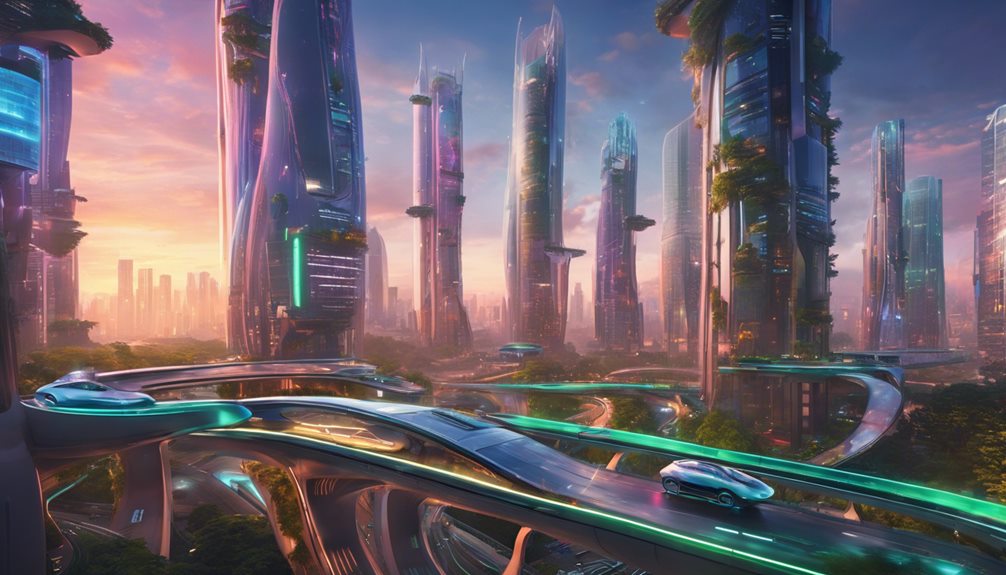
The future of urban development and luxury living is redefining the notion of luxury in the 21st century, where eco-friendly design, state-of-the-art technology, and wellness-oriented communities converge. Sustainable urban planning prioritizes green infrastructure, biodiversity initiatives, and community engagement, as luxury living shifts in the direction of environmental harmony and sophistication. Modern architecture integrates green spaces, reducing carbon impact, and exclusive amenities include rooftop gardens and high-end fitness centers. As technology integration enhances luxury living, making homes more personalized, and wellness-oriented communities promote holistic lifestyles, the future of urban development and luxury living promises to be a harmonious synergy of style, sustainability, and innovation, with much more to discover.
Sustainable Cities of the Future
As the world grapples with the challenges of climate change, environmental degradation, and social inequality, the notion of sustainable cities has become a beacon of hope for a better future. In response, urban planners and policymakers are rethinking the way cities are designed and developed, prioritizing green infrastructure and urban biodiversity to create thriving, resilient, and environmentally conscious cities.
Green infrastructure, such as parks, green roofs, and green walls, plays a significant role in mitigating the urban heat island effect, managing stormwater runoff, and improving air quality. By incorporating these features into city design, urban planners can reduce the urban carbon footprint, improve public health, and increase property values. Additionally, green infrastructure provides habitat for urban biodiversity, supporting local ecosystems and preserving natural habitats.
Urban biodiversity is vital for maintaining ecological balance and providing ecosystem services. By incorporating native plant species, urban planners can create corridors for wildlife, support pollinators, and improve the overall aesthetic appeal of urban environments. In addition, urban biodiversity initiatives can encourage community engagement, promote environmental education, and improve social cohesion.
Luxury Redefined for Urbanites
I find myself drawn to the concept of luxury living in urban environments, where the boundaries between opulence and sustainability are increasingly blurred. As cities evolve, the definition of luxury is shifting to accommodate the needs and values of urbanites. Luxury living is no longer merely about extravagance, but about living in harmony with the environment while still indulging in the finer things in life.
Urban elegance is redefined through sleek, modern architecture that seamlessly integrates green spaces, reducing the city's carbon footprint. Exclusive amenities, such as rooftop gardens, private fitness centers, and high-end concierge services, cater to the discerning tastes of urban dwellers. These amenities not just provide a sense of refinement but additionally offer a respite from the fast-paced city life.
Luxury living in urban environments is about striking a balance between sophistication and sustainability. It's about having control over one's environment, with smart design and state-of-the-art technology working in tandem to create a bespoke living experience. The emphasis is on quality over quantity, with attention to detail and a focus on craftsmanship. As the urban environment continues to evolve, luxury living will be redefined by the intersection of style, sustainability, and innovation, offering urbanites a unique and unparalleled living experience.
Smart Homes for Modern Living
The modern luxury living experience is enhanced by the integration of state-of-the-art technology, particularly in the area of smart homes. High-tech home automation enables residents to effortlessly control and monitor various aspects of their living space, from lighting and temperature to security and entertainment systems. With seamless voice control capabilities, homeowners can conveniently access and manage these features, redefining the concept of modern luxury living.
High-Tech Home Automation
High-tech home automation has transformed modern living by seamlessly integrating technology into daily life, allowing residents to control and monitor their living spaces with ease. This fusion of intelligent design and innovative technology has created a new standard of luxury living, where every aspect of the home can be customized to individual preferences. Automated security systems, for instance, enable homeowners to monitor and respond to potential threats remotely, providing an unprecedented level of safety and peace of mind.
Moreover, high-tech home automation allows for effortless management of lighting, temperature, and entertainment systems, creating a truly personalized living experience. With the ability to control and schedule these functions remotely, residents can optimize energy consumption, reduce waste, and improve their overall quality of life. As technology continues to advance, the possibilities for high-tech home automation are endless, promising a future where luxury living and convenience converge.
Seamless Voice Control
Advancements in voice recognition technology have enabled seamless voice control in modern homes, elevating the luxury living experience to new heights. With the ability to effortlessly command and control various aspects of their living space, residents can revel in the convenience and sophistication that seamless voice control provides. Voice activated assistants, such as Amazon's Alexa and Google Assistant, have become an integral part of intuitive home interfaces, allowing homeowners to adjust lighting, temperature, and entertainment systems with mere vocal instructions. This state-of-the-art technology grants homeowners unparalleled control over their environment, permitting them to customize their living experience with precision and ease. In addition, seamless voice control also improves the safety and security of modern homes, as residents can instantly alert authorities or receive crucial information in emergency situations. As urban development continues to evolve, the incorporation of seamless voice control into luxury living spaces is poised to transform the way we inhabit and interact with our homes.
Wellness-Oriented Urban Communities
Residents of wellness-oriented urban communities prioritize a holistic lifestyle, where every aspect of their daily lives is infused with opportunities to nourish their physical, mental, and emotional well-being. These communities are designed to encourage a sense of connection and community engagement, providing residents with access to amenities and services that support their overall wellness.
Holistic design is a key element in these communities, with buildings and public spaces crafted to promote natural light, ventilation, and air quality. Green spaces and parks are thoughtfully integrated into the urban environment, providing residents with areas for relaxation, recreation, and socialization. Moreover, wellness-focused amenities such as yoga studios, meditation rooms, and fitness centers are often included, allowing residents to prioritize their physical health and mental well-being.
Furthermore, these communities often incorporate healthy food options, such as organic markets and farm-to-table restaurants, to support residents' nutritional needs. By providing a thorough approach to wellness, residents of these communities are empowered to take control of their health and well-being, leading to a more balanced and fulfilling lifestyle. As the demand for wellness-oriented urban communities continues to grow, developers and architects are responding by creating innovative and holistic living spaces that prioritize the health and happiness of their residents.
Technology-Driven Urban Planning
Through the lens of urban planning, technology is redefining the fabric of modern cities, transforming the way we live, work, and interact with our surroundings. The integration of innovative solutions enables urban planners to design more efficient, sustainable, and resilient cities. Technology-driven urban planning leverages data analytics to optimize urban operations, improve public services, and enhance citizen engagement.
| Technology | Application in Urban Planning |
|---|---|
| IoT Sensors | Monitoring and managing traffic flow, air quality, and noise pollution |
| Urban Simulations | Predicting and mitigating the impact of natural disasters and urban growth |
| Data Analytics | Identifying trends and patterns to inform urban policy and development |
| AI-powered Chatbots | Improving citizen engagement and providing personalized services |
The Rise of Luxury Eco-Districts
The Rise of Luxury Eco-Districts marks a significant shift in urban development, as eco-friendly urban planning converges with sustainable luxury living. This emerging trend prioritizes the creation of high-end neighborhoods that not just offer luxurious amenities but also minimize environmental impact. By integrating green spaces, renewable energy, and eco-conscious design, luxury eco-districts redefine the concept of upscale living.
Eco-Friendly Urban Planning
Beyond the sleek skyscrapers and lively streets, a quiet revolution is taking place in urban development, as luxury eco-districts emerge as the new standard of high-end living. This shift is driven by a growing emphasis on eco-friendly urban planning, which prioritizes sustainability and environmental stewardship. Green infrastructure innovations, such as green roofs, urban parks, and tree-lined streets, are becoming integral components of luxury eco-districts. These features not only improve the aesthetic appeal of these districts but additionally provide numerous environmental benefits, including improved air quality, reduced urban heat island effects, and increased biodiversity.
Urban biodiversity initiatives are likewise gaining traction, as developers recognize the importance of preserving and promoting local ecosystems. This includes the incorporation of native plant species, habitat restoration, and wildlife corridors, all of which contribute to a healthier and more resilient urban environment. By integrating these eco-friendly design elements, luxury eco-districts are redefining the concept of high-end living, offering residents a unique blend of luxury, sustainability, and connection to nature.
Sustainable Luxury Living
One of the most significant shifts in luxury living is the emergence of eco-districts, where high-end residences, upscale amenities, and sustainable design converge. These luxury eco-districts redefine the concept of opulence, pairing exclusivity with eco-consciousness. Green architecture and eco-conscious design principles guide the development of these districts, incorporating state-of-the-art sustainable technologies and materials. Residents of these eco-districts can expect to live in harmony with nature, surrounded by lush green spaces, whilst still enjoying the finest amenities and services.
Luxury eco-districts cater to individuals who demand control over their environment and lifestyle. These developments offer a high degree of customization, allowing residents to tailor their living spaces to their specific needs and preferences. From energy-efficient systems to advanced air purification systems, every aspect of these eco-districts is designed to provide a superior quality of life whilst minimizing the carbon footprint. As the demand for sustainable luxury living continues to grow, luxury eco-districts are poised to become the new standard in high-end residential development.
Frequently Asked Questions
How Will Cities Balance Growth With Preserving Natural Habitats and Resources?
As urbanization intensifies, cities must reconcile growth with environmental stewardship. Sustainable architecture and green infrastructure are essential in mitigating the ecological footprint of urban expansion. By incorporating eco-friendly design principles and integrating natural habitats into urban planning, cities can conserve resources and preserve biodiversity. Strategic land use, efficient resource management, and innovative technologies will enable cities to balance growth with environmental responsibility, ensuring a livable and resilient urban environment for future generations.
Will Luxury Living Become More Affordable and Accessible to the Masses?
In the era of indulgent excess, where Marie Antoinette's 'let them eat cake' mentality once reigned, the notion of luxury living has undergone a paradigm shift. As the affluent demographic expands, luxury affordability is no longer an oxymoron. Developers are now poised to make high-end living accessible to the masses, sans the hefty price tag. By integrating affordable amenities, such as smart home technology and eco-friendly designs, luxury living is poised to become an attainable reality for the discerning few who crave control and sophistication.
What Role Will Artificial Intelligence Play in Future Urban Development?
As urbanization continues to shape our cities, artificial intelligence will play a pivotal role in optimizing infrastructure and enhancing citizen experiences. AI-powered smart infrastructure will integrate data-driven insights, enabling cities to respond proactively to emerging challenges. Predictive analytics will facilitate informed decision-making, streamlining resource allocation and mitigating potential disruptions. By leveraging AI, urban planners can create efficient, sustainable, and resilient cities that prioritize the needs of their inhabitants.
Can Urban Planning Truly Mitigate the Effects of Climate Change?
As the planet teeters on the brink of ecological disaster, a pressing question echoes through the halls of urban planning: can we truly mitigate the effects of climate change? The answer lies in sustainable infrastructure, green architecture, and environmental equity. By prioritizing climate resilience, urban biodiversity, and renewable energy, we can craft cities that not just survive but thrive in the face of uncertainty. The fate of our planet hangs in the balance, and the time for decisive action is now. Embracing these principles requires bold policy changes, community engagement, and innovative design that reduces carbon footprints while enhancing quality of life. Whether it’s retrofitting existing structures or planning new developments, every decision must align with sustainability goals to ensure a livable future. For individuals, choices like adopting a greener lifestyle or even moving to Austin—a city known for its commitment to renewable energy and eco-conscious growth—can contribute to the broader movement toward environmental responsibility.
Will Vertical Farming Become a Norm in High-Density Urban Areas?
As the world's population increasingly urbanizes, sustainable agriculture solutions are essential for ensuring food security. Vertical farming, a method of growing produce in vertically stacked layers, may become a norm in high-density urban areas. This approach improves urban resilience by providing a localized food source, reducing carbon footprint, and increasing crop yields. By integrating vertical farming into urban planning, cities can promote sustainable agriculture, bolster food security, and mitigate the environmental impacts of traditional farming practices.