
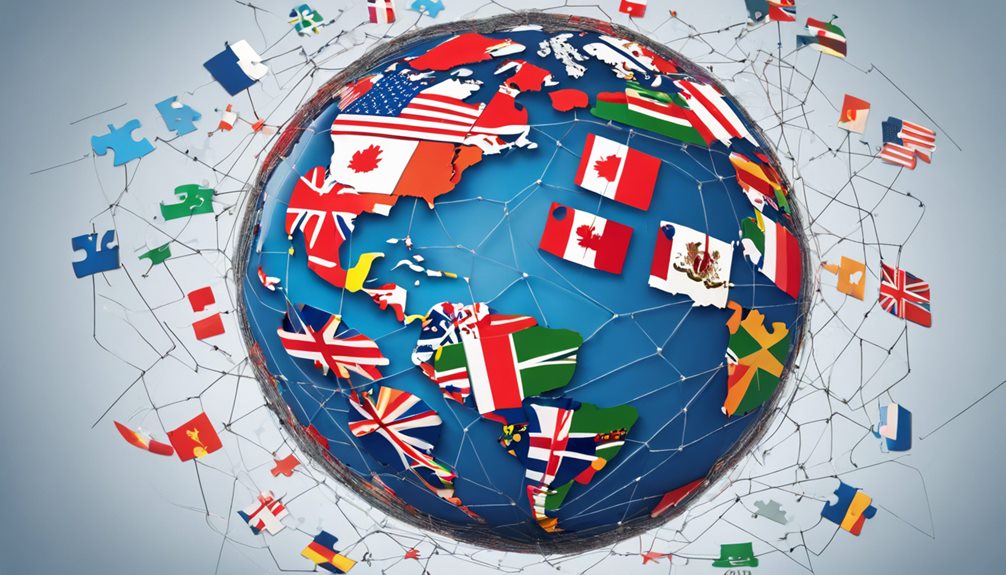
International relations greatly influence domestic policies, as governments navigate complex global dynamics to address pressing issues. The interconnectedness of economies, global environmental challenges, national security concerns, and human rights standards all shape domestic policies. From trade agreements and economic tools to environmental treaties and cybersecurity threats, governments must balance competing interests and priorities. A nuanced comprehension of these complex relationships is vital for effective policy-making, as governments must adapt to an ever-changing global environment. And as we explore the intricacies of international relations, it becomes clear that a deeper grasp of these dynamics is fundamental for informing and shaping domestic policies that truly serve the nation's interests.
Global Economy and Trade Agreements
Across the globe, the interconnectedness of economies has led to an intricate web of trade agreements, shaping the modern international relations terrain. As countries increasingly rely on one another for goods and services, trade policies have become a vital aspect of international relations. Economic sanctions, export controls, and import tariffs are tools used by governments to regulate the flow of goods and services, often to protect domestic industries or punish non-compliant nations. These trade measures are often influenced by political ideologies and economic policies, as governments seek to balance national interests with global cooperation. Disparities in regulatory frameworks and economic priorities can lead to tensions between nations, affecting diplomatic ties and international stability. Consequently, trade negotiations require careful diplomacy to reconcile differing perspectives and foster mutually beneficial agreements.
The global supply chain is heavily influenced by these trade policies, which can either facilitate or obstruct market access. Trade disputes, such as those between the United States and China, can have far-reaching consequences, disrupting the global supply chain and impacting economic growth. Conversely, economic partnerships and trade negotiations can encourage cooperation, leading to tariff agreements that promote free trade and increase economic collaboration.
Effective trade agreements can stimulate economic growth, create jobs, and increase competitiveness. Nevertheless, poorly negotiated agreements can lead to trade deficits, job losses, and decreased competitiveness. As the global economy continues to evolve, the significance of strategic trade policies and negotiations cannot be overstated. Nations must engage in careful trade negotiations, balancing their own economic interests with those of their trading partners, to guarantee mutually beneficial agreements that promote economic growth and stability.
Environmental Policy and Cooperation
Sustainability imperatives are reshaping the terrain of international relations, as environmental degradation and climate change pose significant threats to global stability and prosperity. The need for cooperative environmental policy and action has never been more pressing. International relations play an essential role in shaping domestic environmental policies, as countries must work together to address transboundary environmental issues.
| Environmental Challenges | International Cooperation | Domestic Policy Responses |
|---|---|---|
| Climate Change | Paris Agreement | Climate adaptation measures, renewable energy investments |
| Biodiversity Loss | Convention on International Trade in Endangered Species | Conservation strategies, ecosystem management |
| Pollution | Basel Convention | Pollution control regulations, waste management infrastructure |
Effective environmental policy requires international cooperation, as environmental issues often transcend national borders. International treaties and agreements, such as the Paris Agreement and the Convention on International Trade in Endangered Species, provide a framework for cooperation and collective action. These agreements inform domestic policy responses, guiding countries in the direction of sustainable practices and environmentally conscious decision-making. In turn, domestic policies can influence international relations, as countries work together to address shared environmental challenges. By prioritizing environmental cooperation, countries can promote environmental justice, reduce carbon emissions, and preserve biodiversity, ultimately contributing to a more sustainable and prosperous future.
National Security and Defense
A nation's security and defense are inextricably linked to its international relations, as the pursuit of national interests often involves maneuvering through complex global dynamics. The formation of military alliances, for instance, can notably impact a country's defense expenditures, as shared resources and collective security arrangements can alleviate the financial burden of maintaining a robust defense. Additionally, the development and acquisition of advanced security technologies can be facilitated through strategic partnerships, enabling countries to strengthen their counterterrorism strategies and improve their homeland security capabilities.
Intelligence sharing agreements can also play an important role in advancing national security objectives, as the exchange of critical information can help prevent terrorist attacks and other security threats. Nevertheless, such agreements must be carefully negotiated to guarantee that they do not compromise national sovereignty. In addition, the pursuit of arms control agreements can help reduce the risk of military conflicts, while concurrently promoting regional and global stability. Finally, the decision to engage in military interventions must be carefully weighed, taking into account the potential consequences for regional security, humanitarian considerations, and the long-term sustainability of such operations. In the end, a nation's national security and defense posture is deeply intertwined with its international relations, and a nuanced comprehension of these dynamics is vital for effective policy-making.
Human Rights and Social Justice
The pursuit of human rights and social justice is a cornerstone of international relations, with global standards guiding national policies and practices. The establishment of universal human rights norms has led to the development of national social justice agendas, which aim to address the unique challenges and inequalities within each country. As nations navigate the intricacies of implementing these standards, they must balance their international obligations with domestic priorities and political realities.
Global Human Rights Standards
Millions of people around the world continue to suffer from egregious human rights violations, prompting international scrutiny and calls for reform. The establishment of global human rights standards has become a vital concern, with various stakeholders working together to promote and protect human rights worldwide.
Some key aspects of global human rights standards include:
- Universal Declaration of Human Rights: Adopted in 1948, this declaration sets out fundamental human rights to be universally protected and respected.
- International Covenant on Civil and Political Rights: This covenant, adopted in 1966, outlines specific rights and freedoms, such as the right to life, liberty, and security of person.
- Human Rights Treaty Bodies: These bodies, composed of independent experts, monitor and report on states' compliance with international human rights treaties.
Global advocacy networks and transnational coalitions have played a significant role in promoting global human rights standards. These networks bring together individuals, organizations, and governments to advocate for human rights, share best practices, and provide technical assistance to support the implementation of human rights standards at the national level.
National Social Justice Agendas
Frequently, governments and civil society organizations find themselves grappling with the intricacies of promoting human rights and social justice at the national level. National social justice agendas are critical in addressing the unique challenges faced by marginalized communities within a country's borders. To achieve social equity, grassroots movements and community engagement are fundamental in shaping public policy and informing legislative reforms. Advocacy strategies must adopt intersectional approaches, recognizing that social justice issues are often interconnected and multifaceted. Effective policy frameworks can facilitate progress toward social justice by providing a structured approach to addressing systemic inequalities. In this regard, international relations can influence domestic policies by providing a platform for knowledge sharing, best practices, and collaboration between governments and civil society organizations. By learning from each other, nations can strengthen their national social justice agendas, ultimately contributing to a more just and equitable society for all.
Immigration and Border Control
One of the most contentious issues in international relations is the management of immigration and border control, which has significant implications for a country's domestic policies. The influx of migrants, refugees, and asylum seekers has sparked intense debates globally, with nations struggling to balance humanitarian concerns with national security and economic interests.
The intricacies of immigration and border control are multifaceted, involving various stakeholders and policy areas. Consider the following key aspects:
- Border security and enforcement: Governments must guarantee the integrity of their borders whilst also upholding human rights and international obligations.
- Immigration reform and visa regulations: Nations must navigate the delicate balance between attracting skilled labor, reuniting families, and addressing undocumented immigration, all whilst maintaining public trust and confidence in the system.
- Refugee policies and asylum processes: Countries must provide safe havens for those fleeing persecution, whilst also addressing concerns around migrant integration, labor migration, and citizenship pathways.
Effective immigration and border control policies require cross-border collaboration, international cooperation, and a deep comprehension of the root causes driving migration. By acknowledging the intricacies of this issue, nations can develop thorough and sustainable solutions that address the needs of both receiving countries and migrants themselves.
International Aid and Development
As the global community grapples with the intricacies of immigration and border control, it is equally important to contemplate the role of international aid and development in shaping the lives of individuals and communities worldwide. International aid and development initiatives have the potential to uplift marginalized communities, promote economic growth, and encourage global cooperation. To achieve these goals, international partnerships are significant in mobilizing resources, expertise, and funding. Sustainable initiatives that prioritize economic empowerment, capacity building, and aid effectiveness are fundamental in creating lasting impacts.
Donor accountability and grassroots involvement are critical components in ensuring that aid is targeted and effective. Project sustainability is likewise important, as it enables communities to take ownership of development projects and maintain them over time. Cultural exchanges and technology transfer can likewise play a significant role in promoting development by facilitating the sharing of knowledge, skills, and best practices. In addition, international aid and development can help address the root causes of migration, such as poverty, conflict, and inequality, thereby reducing the pressure on immigration systems. By prioritizing international aid and development, governments can create a more equitable and prosperous world, where individuals and communities can thrive.
Cybersecurity Threats and Responses
The increasing sophistication of cyber attacks has exposed vulnerabilities in critical infrastructure, highlighting the need for governments to prioritize national security imperatives in their cybersecurity strategies. As cyber threats transcend borders, global cooperation is crucial to develop effective response mechanisms and share intelligence on emerging threats. A thorough approach to cybersecurity must balance individual privacy concerns with collective security needs, simultaneously nurturing international partnerships to combat this evolving threat.
Cyber Attack Vulnerabilities
Cyber attack vulnerabilities have become a pervasive concern in today's digitally interconnected world, where a single breach can have far-reaching consequences for national security, economic stability, and individual privacy. The rapid evolution of digital technologies has created new avenues for cyber threats, making it crucial for nations to prioritize cybersecurity education and develop robust digital infrastructure to mitigate these risks.
- Outdated systems: Legacy systems and outdated software create vulnerabilities that can be exploited by cybercriminals, highlighting the need for regular updates and patches.
- Lack of cybersecurity awareness: Insufficient education and awareness about cyber threats among individuals and organizations increase the likelihood of successful attacks.
- Unsecured networks: Unprotected networks and weak passwords provide an open door for hackers, emphasizing the importance of robust network security measures.
National Security Imperatives
In today's interconnected world, where digital technologies permeate every aspect of modern life, cybersecurity threats have become a pressing national security imperative. The increasing reliance on digital infrastructure has created vulnerabilities that can be exploited by hostile actors, posing significant risks to national security. In response, governments have bolstered their defense budgets to invest in counterterrorism strategies, intelligence sharing, and threat assessments to mitigate these risks.
Regional stability is additionally a key concern, as cyber threats can have far-reaching consequences for global security. Military alliances and security partnerships are vital in this regard, enabling countries to share resources and expertise to combat common threats. Arms control agreements and military diplomacy are likewise important in preventing the proliferation of cyber weapons. Moreover, homeland security agencies play a critical role in protecting national critical infrastructure from cyber attacks. Effective cybersecurity measures are consequently fundamental to guarantee national security, regional stability, and global peace.
Global Cooperation Strategies
Effective national security measures against cyber threats rely on concerted international efforts, as no single country can combat the complexity of these threats alone. In today's interconnected world, cyber threats transcend national borders, necessitating global cooperation strategies to mitigate their impact.
To address these threats, countries must engage in:
- Cross-border collaboration: Sharing intelligence and best practices to develop joint responses to cyber threats.
- Diplomatic negotiations: Forging agreements and treaties to establish norms and standards for cyber governance.
- Technological partnerships: Developing and sharing advanced technologies to detect and respond to cyber threats.
Global cooperation strategies additionally encompass other areas, such as global health initiatives, transnational networks, cultural exchange programs, international labor standards, humanitarian interventions, global education policies, and sustainable development goals. By adopting an all-encompassing approach, countries can leverage their collective strengths to combat cyber threats and guarantee a safer, more secure world for all.
Energy Policy and Resource Management
Several factors converge to make energy policy and resource management a vital aspect of a nation's domestic agenda. The shift in the direction of renewable energy sources, for instance, has significant implications for resource allocation and energy independence. As countries endeavor to reduce their fossil fuel dependency, they must navigate complex climate negotiations and invest in energy innovation to drive sustainable development. Energy diplomacy plays an important role in these efforts, as nations engage in geopolitical competition to secure energy resources and influence global energy transformations.
Effective energy policy and resource management are fundamental for maintaining energy security, promoting economic growth, and mitigating the impact of climate change. Governments must balance the need for energy independence with the imperative to reduce greenhouse gas emissions and adapt to cleaner energy sources. This requires careful planning, investment in energy innovation, and international cooperation to address the global nature of energy challenges. In addition, the increasing importance of energy diplomacy in international relations highlights the need for nations to engage in constructive dialogue and cooperation to address energy security concerns and promote sustainable development. By prioritizing energy policy and resource management, nations can guarantee a more secure, sustainable, and prosperous future.
Diplomacy and Foreign Policy
As the global environment becomes increasingly interconnected, diplomacy and foreign policy have emerged as fundamental components of a nation's domestic agenda, closely intertwined with its international relations. Effective diplomacy and foreign policy not merely shape a nation's global image but additionally have a profound impact on its domestic policies.
In today's globalized world, diplomacy and foreign policy play a vital role in:
- Fostering bilateral negotiations: Diplomacy enables nations to engage in bilateral negotiations, facilitating cooperation on issues such as trade, security, and economic development. These negotiations can lead to mutually beneficial agreements, creating opportunities for domestic growth and development.
- Exerting soft influence: A nation's foreign policy can be used to exert soft influence, promoting its values, culture, and ideals globally. This can help to create a positive international image, attracting foreign investment, tourism, and talent, eventually contributing to domestic economic growth.
- Shaping global governance: A nation's diplomacy and foreign policy can influence global governance, shaping international norms, laws, and institutions. This, in turn, can impact domestic policies, as nations must adapt to and comply with international agreements and standards.
Multilateral Institutions and Governance
Three decades of globalization have witnessed the proliferation of multilateral institutions, which have become indispensable in shaping the global governance framework. These institutions, such as the United Nations, World Trade Organization, and World Health Organization, play a vital role in promoting multilateral collaboration and facilitating international cooperation. They aim to address global challenges, such as climate change, economic inequality, and pandemics, through collective security and policy coherence.
The effectiveness of multilateral institutions depends on their ability to balance authority dynamics among member states. This can be achieved by encouraging inclusive decision-making processes, ensuring representation of diverse interests, and promoting transparency and accountability. International treaties and agreements, such as the Paris Agreement and the Sustainable Development Goals, are key instruments in promoting global governance and guiding national policies.
However, multilateral institutions additionally face challenges, including conflicting interests, inadequate regulatory frameworks, and inadequate resources. Furthermore, diplomatic relations between nations can influence the functioning of these institutions, with some countries exerting significant influence over others. In spite of these challenges, multilateral institutions remain vital in addressing global health crises, promoting economic development, and ensuring collective security. Their continued relevance and effectiveness are significant in shaping the future of global governance and influencing domestic policies.
Frequently Asked Questions
Do International Relations Affect Local Politics and Community Development?
International relations certainly impact local politics and community development. Trade agreements can stimulate economic growth, whereas cultural exchange programs encourage cross-cultural comprehension. Global partnerships and security alliances can influence local security concerns, on the other hand, immigration policies shape demographic dynamics. Additionally, environmental treaties can dictate local sustainability initiatives. These international dynamics trickle down to affect community development, informing local policies and shaping the social, economic, and environmental fabric of localities.
Can a Country's Foreign Policy Impact Its Internal Conflicts?
According to a UN report, in 2019, 70 million people were forcibly displaced worldwide, a staggering number that highlights the far-reaching consequences of internal conflicts. A country's foreign policy can certainly impact its internal conflicts. Foreign alliances can either fuel or resolve conflicts, as seen in the role of international mediators in conflict resolution. Military interventions, often justified by national security concerns, can likewise escalate or mitigate internal strife. Effective foreign policy can help mitigate internal conflicts, but mismanagement can exacerbate them, underscoring the need for nuanced diplomacy.
How Do International Sanctions Influence a Nation's Economy?
International sanctions can have far-reaching economic repercussions on a nation's economy. By imposing trade restrictions, sanctions can limit a country's access to global markets, disrupt supply chains, and reduce foreign investment. This can lead to higher unemployment, inflation, and decreased economic growth. In addition, the restrictions can likewise impact specific industries, such as energy or agriculture, exacerbating the economic downturn. As a result, governments may need to implement austerity measures, further straining the economy and potentially sparking social unrest.
Do Diplomatic Relations With Other Countries Impact Public Health Policy?
Diplomatic relations with other countries greatly influence public health policy, particularly in the area of vaccine diplomacy. Strong international ties can facilitate access to crucial vaccines, medical expertise, and global health initiatives. Conversely, strained relations can hinder the flow of fundamental healthcare resources, exacerbating public health crises. Effective diplomatic relations can nurture collaborative global health initiatives, enabling nations to share knowledge, resources, and best practices to combat pandemics and improve overall public health outcomes.
Can International Relations Influence a Country's Education System?
The connection between international relations and a country's education system is multifaceted. Global standards and benchmarks in education can be shaped by international agreements and organizations, influencing a nation's curriculum and pedagogy. Furthermore, educational exchange programs promote cultural comprehension and knowledge sharing, allowing countries to learn from each other's best practices. As a result, a country's education system can be greatly influenced by its international relations, in the end shaping the skills and competencies of its future workforce.