
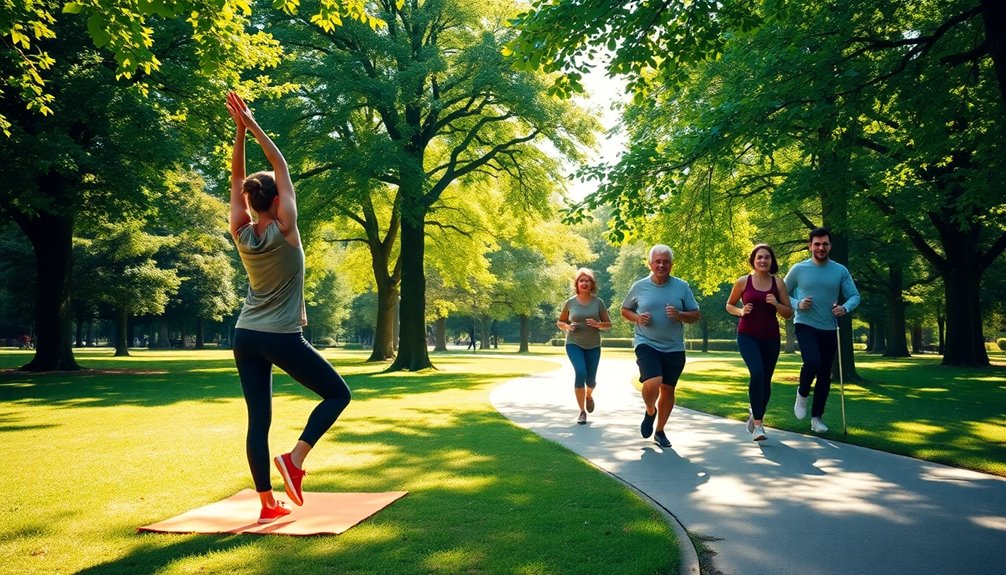
Improving circulation through daily movement is crucial for overall health. Incorporating cardio exercises, flexibility training, and resistance workouts can effectively boost blood flow. Quick desk stretches and short walking breaks improve circulation as they alleviate stress. Engaging in household chores and active hobbies like gardening or dancing promotes physical activity. Mindful breathing techniques additionally support better oxygen intake. Setting realistic movement goals helps maintain consistency and motivation for lifelong health. There are many more strategies to explore for improved well-being.
Article Highlights
- Engage in regular cardio exercises like walking or swimming to boost heart rate and enhance blood circulation.
- Incorporate quick desk stretches and movement breaks throughout the day to invigorate blood flow.
- Set realistic daily movement goals and track your progress to maintain consistency and motivation.
- Include low-impact activities such as yoga and gardening to improve flexibility and promote circulation without strain.
- Practice mindful breathing techniques to enhance oxygen intake and overall relaxation, benefiting circulation.
Understanding Poor Circulation and the Role of Daily Movement
Poor circulation can greatly impact overall health and well-being. It often leads to fatigue and can be symptomatic of various circulatory disorders that hinder efficient blood flow and oxygen delivery throughout the body. Comprehending the underlying risk factors is essential for implementing effective preventive measures. Lifestyle changes, such as regular exercise, play a significant role in promoting circulation improvement. By engaging in physical activities, individuals can boost blood flow, which not only alleviates fatigue but also mitigates the health impacts associated with poor circulation. Additionally, incorporating active recovery methods can enhance blood circulation and facilitate muscle relaxation. Recognizing the importance of exercise benefits can empower individuals to make informed choices, cultivating a supportive environment for those affected by circulatory issues. Through education and action, communities can work together to improve collective health outcomes.
Effective Movement Strategies for Boosting Circulation
Incorporating specific movement strategies can greatly improve circulation and overall health. Those seeking to serve others can benefit from adopting various approaches that bolster vascular function. Here are four effective movement strategies:
- Cardio Exercises: Engaging in aerobic routines, such as brisk walking or cycling, boosts heart rate and circulation.
- Flexibility Training: Dynamic stretches promote blood flow and flexibility, crucial for overall mobility.
- Resistance Workouts: Incorporating light weights can improve muscle strength and circulation.
- Low Impact Activities: Gentle movements, like swimming or yoga, provide effective wellness routines without straining the body.
Integrating movement breaks and prioritizing posture correction throughout the day can further elevate functional fitness and support overall well-being.
Quick Stretches to Boost Circulation at Your Desk
Many office workers experience reduced circulation from prolonged sitting, making quick desk stretches vital for revitalizing blood flow. Incorporating desk yoga into daily routines can substantially improve well-being. Simple circulation exercises, such as arm stretches and wrist rotations, promote upper body mobility. Neck rolls and seated twists facilitate spinal flexibility, whereas foot pumps and ankle mobility exercises invigorate the lower extremities. Encouraging posture adjustments can alleviate discomfort and improve circulation concurrently. Deep breathing techniques, combined with these stretches, further boost oxygen flow throughout the body. By integrating these quick stretches into the workday, individuals not only enhance their circulation but also cultivate a more productive and energized environment, ultimately benefiting their colleagues more effectively. Additionally, energy-efficient materials can contribute to a healthier workspace, promoting overall well-being.
Take Short Walks for Better Circulation
Taking short walks throughout the day can greatly improve circulation and overall health. By incorporating movement frequency into daily routines, individuals can experience numerous walking benefits. Here are four impactful reasons to reflect on short outdoor strolls:
- Circulation Boost: Regular walking improves blood flow, promoting better nutrient delivery to tissues.
- Cardiovascular Health: Engaging in mindful steps strengthens the heart and reduces health risks.
- Short Breaks: Taking brief walking breaks can alleviate stress and improve focus.
- Exploring Walking Routes: Discovering new paths can make movement enjoyable and invigorating. Additionally, education fosters critical thinking that can enhance decision-making about personal health choices.
Using Household Chores to Stay Active
Household chores offer a practical way to stay active while managing daily responsibilities. Engaging in various tasks not just promotes better circulation but serves a purpose in maintaining a harmonious living environment. Additionally, these activities can nurture youth empowerment and create a sense of belonging among individuals.
| Chore Type | Activity Examples | Circulation Benefits |
|---|---|---|
| Cleaning Routines | Dusting, vacuuming | Boosts heart rate |
| Gardening Benefits | Planting, weeding | Improves flexibility |
| Cooking Activities | Chopping, stirring | Improves hand-eye coordination |
| Organizing Tasks | Decluttering, rearranging | Increases movement |
Incorporating laundry workouts, DIY projects, and pet care into daily life can further improve overall wellness. These activities make staying active enjoyable and fulfilling, serving both oneself and others.
Choosing Hobbies That Promote Circulation
Choosing Hobbies That Promote Circulation
Choosing hobbies that promote circulation can considerably improve overall health. Engaging in active outdoor pursuits, such as hiking or cycling, encourages physical movement and boosts blood flow. Furthermore, creative movement activities, like dance or yoga, provide enjoyable ways to stimulate circulation during the promotion of self-expression. Additionally, Austin’s thriving job market offers ample opportunities for active lifestyles, making it easier to incorporate movement into daily routines.
Active Outdoor Pursuits
Engaging in active outdoor pursuits can greatly improve circulation and overall health. Individuals seeking to serve others can incorporate these enjoyable activities into their routines:
- Hiking Trails: Explore local trails, promoting both cardiovascular health and community engagement.
- Cycling Routes: Join group rides to encourage camaraderie as well as enhancing fitness.
- Nature Walks: Organize community walks that promote connection with nature and each other.
- Outdoor Sports: Participate in team sports, which can improve circulation and strengthen social bonds.
In addition to these, consider gardening tips for physical activity in the yard, playground activities for family engagement, beach outings for fun in the sun, and fitness challenges to inspire collective motivation. These pursuits can create a positive ripple effect in the community.
Creative Movement Activities
Exploring creative movement activities can considerably improve circulation while providing enjoyable ways to express oneself. Engaging in dance parties nurtures rhythmic movements that energize both body and spirit. Yoga sessions and tai chi offer gentle, mindful practices that elevate circulation through creative stretching and balance. Playful workouts encourage community and fun, making fitness feel less like a chore. Incorporating body percussion into activities can further stimulate the body, combining rhythm with movement. Movement games invite participants to explore their physicality in a spirited manner. Finally, art exploration through dance or expressive movement adds an element of creativity, making it a holistic approach to wellness. Overall, these activities not just promote circulation but also nurture joy and connection.
Mindful Breathing Techniques for Enhanced Blood Flow
Mindful breathing techniques can greatly improve blood flow throughout the body. By incorporating specific practices, individuals can boost oxygen flow and promote overall well-being. Here are four effective methods:
- Diaphragm Expansion: Focus on deep breathing to fully engage the diaphragm, allowing for greater oxygen intake.
- Rhythmic Inhalation: Establish a steady rhythm, inhaling for a count of four and exhaling for a count of four to facilitate relaxation.
- Breathing Exercises: Integrate simple exercises like box breathing to encourage mindfulness and improve circulation.
- Relaxation Techniques: Utilize guided meditations to support stress reduction, cultivating a peaceful state conducive to improved blood flow.
These mindfulness practices not just provide an energy boost but also serve the greater purpose of nurturing oneself and others. Additionally, incorporating AI-driven solutions can optimize your health routines by personalizing recommendations based on your individual needs.
Setting Daily Movement Goals for Lifelong Health
Setting daily movement goals is crucial for maintaining lifelong health and improving circulation. By establishing realistic targets, incorporating a variety of activities, and tracking progress regularly, individuals can create a sustainable routine. This approach not only improves physical well-being but additionally cultivates a positive mindset toward movement. Moreover, the role of resilience in setting and achieving these goals can transform setbacks into opportunities for growth.
Establishing Realistic Targets
Establishing realistic targets is essential for anyone aiming to improve their circulation through daily movement. By setting achievable goals, individuals nurture a sense of personal accountability and motivation. To effectively establish these targets, consider the following:
- Define realistic milestones that reflect one’s current fitness level.
- Implement daily reminders to encourage consistency in movement.
- Utilize progress tracking tools to celebrate gradual increases in activity.
- Adjust activities based on personal time management and energy levels.
These strategies, complemented by positive reinforcement, can greatly improve one’s commitment to daily movement. By focusing on realistic milestones and making activity adjustments, individuals can create a sustainable routine that supports lifelong health and circulation improvement.
Incorporating Variety Daily
Incorporating a variety of activities into daily movement routines can greatly improve overall circulation and well-being. This diversity not only boosts physical health but also nurtures social connections and enriches lives. By setting daily movement goals that include various activities, individuals can experience holistic benefits.
| Activity Type | Examples |
|---|---|
| Dance | Dance classes, dance parties |
| Mindfulness | Yoga sessions |
| Combat | Martial arts |
| Adventure | Nature hikes, cycling routes |
Engaging in group sports and fitness challenges promotes teamwork, whereas playground games encourage fun and creativity. Swimming laps offers a revitalizing workout. Embracing this variety keeps movement enjoyable and sustainable, paving the way for lifelong health and increased circulation.
Tracking Progress Regularly
Although individuals often focus on variety in their movement routines, regularly tracking progress is equally vital for achieving lifelong health. By implementing effective progress tracking, one can promote accountability and motivation.
Here are four beneficial measurement tools to improve tracking:
- Activity Journals: Document daily movements and reflect on improvements.
- Fitness Apps: Utilize technology to record steps, workouts, and overall activity levels.
- Wearable Devices: Employ smartwatches or fitness bands to monitor heart rate and calories burned.
- Weekly Assessments: Set aside time each week to evaluate progress and adjust goals accordingly.
Frequently Asked Questions
How Long Should I Move Daily to Improve Circulation?
To improve circulation, individuals should aim for at least 30 minutes of daily movement. Engaging in circulation exercises, such as walking, cycling, or stretching, not just promotes blood flow but additionally contributes to overall well-being. Consistency is key; incorporating these activities into a daily routine can greatly benefit those looking to serve others by maintaining their health and vigor. In the end, nurturing better circulation supports a more active, engaged lifestyle.
Can Certain Foods Enhance Circulation Alongside Movement?
Certain foods can certainly improve circulation alongside movement. Picture a lively garden where circulation-boosting foods like berries, fatty fish, and nuts flourish, nurtured by nutrient-rich herbs such as garlic and ginger. These foods not merely support blood flow but additionally offer health benefits that serve others. Incorporating them into one’s diet can create a ripple effect, promoting overall wellness and encouraging a sense of community and care for loved ones.
What Are the Signs of Improved Circulation?
Improved circulation manifests through various signs. Individuals may notice reduced fatigue, as increased blood flow revitalizes energy levels. Skin changes, such as a healthier complexion and improved temperature regulation, can likewise indicate better circulation. Furthermore, a decrease in muscle cramps often accompanies improved blood flow, allowing for greater physical comfort and activity. Recognizing these signs can help individuals better serve others by promoting a more energetic and supportive presence in their communities.
Is It Safe to Exercise With Existing Circulation Issues?
Exercising with existing circulation issues can be safe, provided individuals take necessary exercise precautions. It’s vital for those affected to consult healthcare professionals to identify specific circulation types and tailor an exercise regimen accordingly. Gentle activities like walking or swimming may be beneficial, whereas avoiding high-intensity workouts is advisable. Monitoring symptoms during exercise guarantees safety and effectiveness, allowing individuals to improve their health as they serve others through an active lifestyle.
How Does Stress Affect My Circulation?
Stress acts like a storm cloud, darkening the body’s natural rhythms. It constricts blood vessels, impeding circulation and causing a cascade of health issues. Effective stress management becomes crucial, serving as a beacon of hope. By incorporating circulation techniques—such as deep breathing and gentle movement—individuals can combat the tempest of stress, cultivating a nurturing environment for both themselves and those they wish to support. In this way, peace can flourish amidst chaos.