
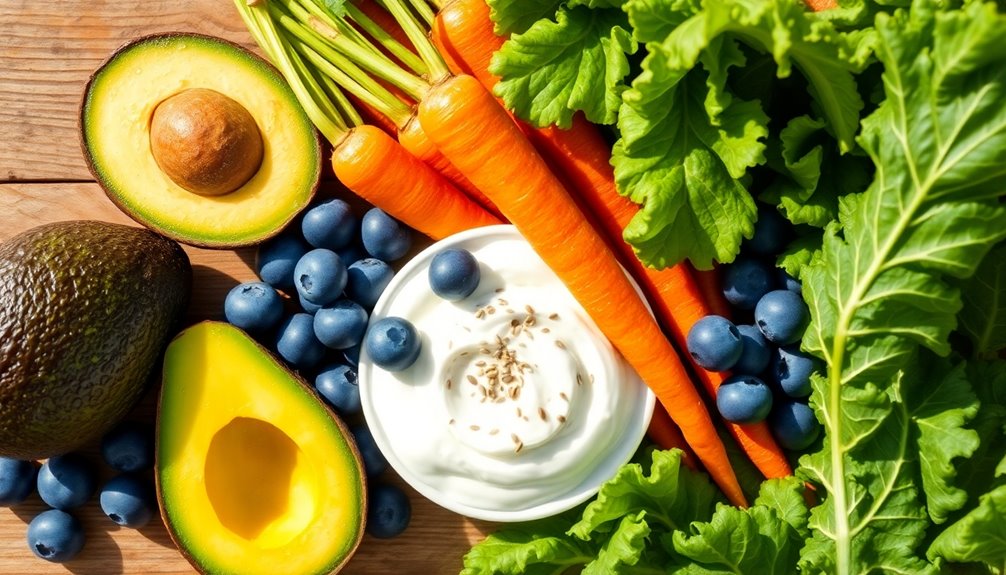
Eating nutrient-rich foods is crucial for promoting healthy skin from within. Fruits like citrus and berries provide important vitamins and antioxidants that support collagen production and protect skin from damage. Vegetables such as carrots and leafy greens reduce inflammation and improve complexion. Hydrating foods like watermelon and healthy fats from avocados or fatty fish boost skin elasticity and nourishment. A balanced diet combined with mindful lifestyle choices can greatly enhance skin vitality, revealing deeper insights into skin health.
Article Highlights
- Incorporate citrus fruits like oranges for vitamin C, boosting collagen production and skin hydration.
- Include fatty fish, such as salmon, rich in omega-3s to improve skin hydration and combat dryness.
- Consume antioxidant-rich berries and leafy greens to protect skin health and promote a youthful complexion.
- Stay hydrated with watermelon and cucumbers, which help maintain skin elasticity and overall hydration.
- Prioritize a balanced diet focusing on nutrient-rich foods to enhance skin clarity and vitality.
Nutrient-Rich Foods for Healthy Skin: Fruits
When considering the impact of diet on skin health, fruits emerge as significant contributors owing to their rich nutrient profiles. Citrus fruits, such as oranges and grapefruits, are particularly beneficial as a result of their high vitamin C content, which aids in collagen production and skin repair. Similarly, tropical fruits like papaya and mango provide fundamental antioxidants and vitamins that combat oxidative stress, promoting a youthful appearance. The natural sugars found in these fruits offer hydration and nourishment, supporting overall skin vitality. Incorporating a variety of these nutrient-rich fruits into daily meals not solely improves skin health but likewise serves as a delightful way to encourage others to embrace healthier dietary choices for radiant skin.
Hydrating Foods for Beautiful Skin
Fruits not merely contribute vital nutrients but moreover play a key role in skin hydration. Including hydrating foods in one’s diet can improve skin’s appearance and overall health.
- Citrus Fruits: Oranges, grapefruits, and lemons are packed with water and vitamin C, promoting hydration and collagen production.
- Watermelon: This revitalizing fruit contains over 90% water, making it an excellent choice for skin hydration.
- Cucumbers: Often overlooked, cucumbers are hydrating and rich in silica, which supports skin elasticity.
- Herbal Teas: Chamomile and peppermint teas not only hydrate but likewise provide antioxidants, calming the skin from within.
Additionally, incorporating energy-efficient materials into one’s diet can greatly benefit skin health, nurturing a radiant and youthful appearance.
Best Vegetables for Reducing Inflammation in Skin
Vegetables play a crucial role in combating skin inflammation, as they are rich in antioxidants and anti-inflammatory compounds. Among these, carrots stand out for their high beta-carotene content, which transforms into vitamin A, promoting skin healing and reducing redness. The carrot benefits include improving skin texture and overall appearance. Beetroot juice, in contrast, is another powerful ally in the fight against inflammation. Its rich array of vitamins and minerals supports blood circulation, delivering important nutrients to the skin and enhancing its vitality. Incorporating these vegetables into daily meals not only benefits individual health but also serves others by promoting a culture of wellness and skin care, critical for maintaining a radiant complexion.
Healthy Fats That Support Skin Elasticity
Healthy fats play an essential role in maintaining skin elasticity. Omega-3 fatty acids, along with the nourishing properties of avocado and olive oil, contribute greatly to skin health. Incorporating these fats into the diet can help improve skin’s firmness and overall appearance.
Omega-3 Fatty Acids
Omega-3 fatty acids are essential nutrients that play a significant role in maintaining skin elasticity. These healthy fats improve skin hydration and can help combat dryness, promoting a youthful appearance. Incorporating omega-3 sources into one’s diet can benefit both skin health and overall well-being.
Consider these notable omega-3 sources:
- Fatty Fish: Salmon and mackerel are rich in omega-3s, supporting skin vitality.
- Walnuts: A plant-based source that offers healthy fats and antioxidants.
- Chia Seeds: These tiny seeds are packed with omega-3s and offer hydration benefits.
- Flaxseeds: Ground flaxseeds are an excellent addition to smoothies, boosting skin hydration.
Avocado and Olive Oil
Avocados and olive oil are celebrated for their rich content of monounsaturated fats, which play a crucial role in promoting skin elasticity. The avocado benefits extend beyond its creamy texture; it is packed with vitamins E and C, both of which are indispensable for skin health. These nutrients help combat oxidative stress and support collagen production, leading to a more youthful appearance. Similarly, olive oil is renowned for its anti-inflammatory properties, which can soothe irritated skin and improve overall hydration. When incorporated into a balanced diet, these healthy fats not only nourish the skin from within but additionally contribute to a radiant complexion. Serving others with meals that include avocados and olive oil can encourage healthier skin for everyone.
Top Antioxidant Foods for Skin Protection
Antioxidants play an essential role in protecting skin health by combating free radicals. Foods such as berries, leafy greens, and nuts and seeds are rich in these beneficial compounds. Incorporating these antioxidant powerhouses into one’s diet can improve skin resilience and appearance.
Berries: Nature’s Antioxidant Powerhouses
A handful of berries can considerably boost skin health, thanks to their rich antioxidant content. These lively fruits are not just delicious but also offer numerous antioxidant benefits that can help protect and rejuvenate the skin. Various berry varieties, such as:
- Blueberries – Known for their high levels of vitamins C and E, which combat oxidative stress.
- Strawberries – Packed with ellagic acid, they help prevent collagen breakdown.
- Raspberries – Rich in quercetin, they reduce inflammation and promote a clear complexion.
- Blackberries – Loaded with anthocyanins, they improve skin elasticity and hydration.
Incorporating these berries into a balanced diet serves as a wonderful way to boost skin vitality, making them crucial for those seeking to support others in their skin health journey.
Leafy Greens Benefits
Leafy greens serve as a cornerstone for skin health, delivering an impressive array of nutrients and antioxidants. Rich in vitamins A, C, and K, these vegetables help combat oxidative stress, promoting a youthful complexion. Nutrient-dense options like spinach, kale, and collard greens provide crucial minerals that support skin elasticity and firmness. Furthermore, the high water content in leafy greens aids in skin hydration, ensuring a plump and radiant appearance. Incorporating these lively greens into meals not only improves flavor but also serves to nourish the skin from within. By prioritizing leafy greens, individuals can actively contribute to their skin’s health, cultivating a healthy glow that reflects overall well-being.
Nuts and Seeds Boosts
Although many may overlook them, nuts and seeds are formidable sources of antioxidants that greatly improve skin protection. Rich in crucial fatty acids, they serve not merely to nourish the skin but also to combat oxidative stress. Incorporating a variety of these foods can elevate skin health considerably.
Consider these options:
- Walnuts – High in omega-3 fatty acids, they help maintain skin elasticity.
- Almonds – Packed with vitamin E, they protect against UV damage.
- Chia Seeds – These small dynamos are rich in antioxidants and promote hydration.
- Pumpkin Seeds – A great source of zinc, they aid in skin repair and regeneration.
Supplements and Lifestyle Choices for Radiant Skin
To achieve radiant skin, individuals often overlook the considerable impact of supplements and lifestyle choices on their overall complexion. Incorporating collagen boosters, such as vitamin C and hyaluronic acid, can improve skin elasticity and hydration. These supplements work synergistically to support the skin’s natural structure, promoting a youthful appearance. Additionally, hydration tips are crucial; drinking adequate water and consuming hydrating foods, like cucumbers and watermelon, can greatly improve skin texture. A balanced diet rich in antioxidants, along with regular exercise, likewise plays an important role. Prioritizing sleep and managing stress through mindfulness practices can contribute to a clearer complexion. With these thoughtful choices, individuals can serve others by radiating health and vitality through their skin. Furthermore, understanding the role of biochemical processes in nutrient absorption can enhance the effectiveness of these dietary choices.
Frequently Asked Questions
How Quickly Can Diet Affect Skin Health?
Diet can influence skin health within weeks. For instance, a hypothetical individual increasing their intake of vitamin C-rich foods might notice improved skin texture and radiance in just 14 days. This rapid change occurs as a result of improved nutrient absorption, which supports skin renewal. Furthermore, a balanced diet positively affects the skin microbiome, promoting beneficial bacteria that contribute to overall skin health. Consequently, dietary adjustments can lead to noticeable skin improvements in a short timeframe.
Are There Foods to Avoid for Better Skin?
Certain foods can certainly hinder skin health. High sugar intake may lead to inflammation and breakouts, whereas dairy effects often exacerbate acne in susceptible individuals. Processed foods, loaded with unhealthy fats and additives, can disrupt skin balance and contribute to premature aging. Furthermore, an imbalance of fatty acids, particularly omega-6s over omega-3s, can negatively impact skin health. By avoiding these foods, individuals may promote healthier skin for themselves and those they serve.
Can Hydration Alone Improve Skin Appearance?
Hydration alone can greatly improve skin appearance, particularly when combined with other factors. Adequate hydration sources, such as water and hydrating foods, boost skin elasticity, making it look plumper and more youthful. Although hydration is crucial, it should be part of a holistic approach that includes a balanced diet and proper skincare. In the end, maintaining ideal hydration supports overall skin health, encouraging a radiant complexion that benefits both the individual and those they serve as well.
How Does Stress Impact Skin Health?
In a world where a delicate flower struggles against harsh winds, stress emerges as a relentless foe. Stress hormones surge, igniting skin inflammation and disrupting the balance of beauty. Many, seeking comfort, turn to emotional eating, neglecting their skincare routine. This cycle perpetuates a cycle of distress, reflecting on the skin’s surface. Compassionate care is crucial, as nurturing one’s inner self can lead to a blooming, resilient exterior, radiating health and vigor.
What Role Does Sleep Play in Skin Condition?
Sleep plays a significant role in skin condition, particularly through its influence on sleep cycles and skin regeneration. During deep sleep, the body undergoes fundamental repair processes, promoting the production of collagen and reducing inflammation. This restorative phase allows skin cells to regenerate, resulting in a healthier complexion. Prioritizing quality sleep not merely improves overall well-being but additionally supports the skin’s resilience, making it important for those who wish to care for others effectively.